Address
86 Amesbury Road
Manchester M9 6JF United Kingdom
Understand dehumidifier running costs in UK homes, from wattage and electricity rates to practical ways to cut damp-control bills without losing comfort.
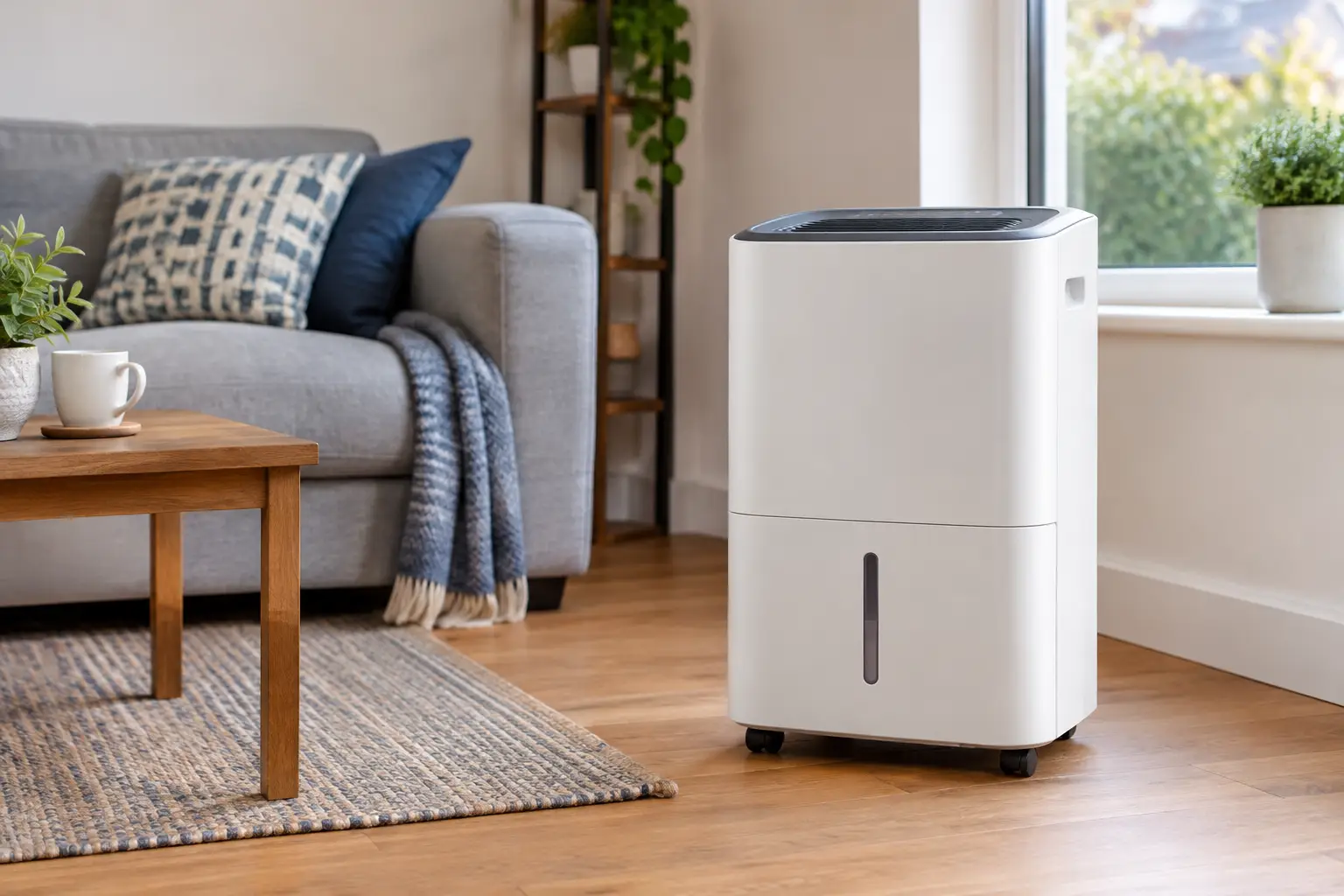
A dehumidifier can make a chilly bedroom, steamy bathroom or condensation-prone flat feel far more comfortable. But before leaving one on all day, it is sensible to understand dehumidifier running costs. The good news is that the true cost is usually easy to work out – and it is often lower than the cost of ignoring damp, mould and wet washing indoors.
Your running cost comes down to three things: the unit’s wattage, how long it runs, and what you pay per kilowatt-hour (kWh) of electricity. Wattage is shown on the product label or in the instruction manual. Electricity prices vary by tariff and region, so use the rate on your latest bill for the most accurate figure.
The calculation is simple:
Wattage ÷ 1,000 × hours used × electricity unit price = running cost
For a quick example, imagine a 250W dehumidifier running for eight hours, with electricity priced at 28p per kWh:
250 ÷ 1,000 × 8 × £0.28 = £0.56 per day
Used every day for a 30-day month, that works out at around £16.80. It is a useful guide, but not always the final figure. Most modern compressor and desiccant models switch themselves off or reduce activity once the chosen humidity level is reached. A machine may be plugged in for eight hours without drawing its full rated power for the whole time.
Small units designed for cupboards, caravans or a single compact room can use around 150W to 250W. A typical domestic compressor dehumidifier may use roughly 200W to 400W, while larger models and some desiccant machines can use 600W or more when working hard.
At an electricity rate of 28p per kWh, a 200W unit costs about 5.6p per hour at full power. A 300W machine costs around 8.4p per hour, and a 600W machine around 16.8p per hour. That makes a noticeable difference over long periods, particularly during a damp winter.
However, the lowest wattage is not automatically the cheapest choice. A small machine may struggle in a large, cold room and run for much longer. A correctly sized model can pull moisture from the air more efficiently, reach its target sooner and spend more time resting.
Compressor dehumidifiers are commonly the more economical choice in a centrally heated home. They generally perform well in warmer indoor spaces and can remove plenty of moisture without high electricity use.
Desiccant dehumidifiers often use more power, but they work better in cooler conditions. That can make them a practical option for garages, conservatories, unheated utility rooms, caravans and chilly spare rooms. They also tend to blow out slightly warmer air, which can feel useful in a cold space.
So, while a desiccant model can cost more per hour to run, it may still be the better fit where a compressor unit would perform poorly. The right choice depends on the room as much as the price tag.
A dehumidifier might be advertised as extracting 10, 12 or 20 litres a day. This figure helps compare models, but it is normally measured in warm, very humid test conditions. A UK home in winter is usually cooler and less humid than a laboratory test setting, so real-world extraction will be lower.
Rather than choosing purely by litres per day, consider the size of the space, how often laundry is dried indoors, the number of occupants and whether there is an ongoing damp issue. A family drying washing on airers in a two-bedroom flat will have a different moisture load from a couple using a unit in one bedroom.
For everyday use, look for a machine with a humidistat. This lets you set a target humidity, commonly around 50 to 60 per cent. It prevents the dehumidifier from constantly chasing very dry air, which wastes electricity and can make a room feel less comfortable.
Laundry mode is one of the most useful features on a dehumidifier, especially when the weather rules out putting clothes on the line. A load of washing releases a surprising amount of moisture as it dries. Without ventilation or moisture control, that water can settle on cold windows and walls.
If a 300W unit runs flat out for six hours beside an airer, at 28p per kWh it costs about 50p. In reality, the time and cost depend on fabric thickness, how well the washing was spun, room temperature and whether doors are kept closed.
That may be cheaper than repeatedly heating a room with the windows open to clear condensation. It can also be a gentler alternative to tumble drying for clothes that should not be exposed to high heat. For best results, place the airer and dehumidifier in a small room, shut the door, leave sensible clearance around the unit and avoid covering its air intake or outlet.
Start by setting a sensible humidity target instead of using continuous mode. Around 55 per cent is a comfortable starting point for many homes. If condensation persists, try 50 per cent for a few days and see whether the room improves.
Keep doors and windows closed while the machine is dealing with a particular room or drying laundry. Running a dehumidifier beside an open window means it is constantly treating fresh outside air. Once the job is done, regular short bursts of ventilation still matter, especially after showering and cooking.
Empty the water tank promptly, or use a continuous drainage hose where it is safe and suitable. A full tank stops many units automatically, leaving damp air untreated until someone notices. Clean the filter as recommended too. A clogged filter restricts airflow and can make the unit work harder for less result.
Use the timer or smart controls if your model has them. There is little point running a bedroom dehumidifier all afternoon if the room only suffers from overnight condensation. Targeting the problem period gives you a better balance of comfort and cost.
Finally, tackle easy sources of excess moisture. Use extractor fans when cooking or showering, keep pan lids on, avoid drying wet coats on radiators where possible, and check for leaks. A dehumidifier manages moisture in the air, but it cannot repair failed sealant, a dripping pipe or penetrating damp.
For some homes, yes. Daily use can be worthwhile in winter, in properties with persistent condensation, or where washing is dried indoors most days. It can help protect wardrobes, soft furnishings, window frames and walls from the conditions mould needs to grow.
For other households, a few hours after showers, cooking or laundry may be enough. Watch how quickly the tank fills, check for condensation in the morning and, if you have one, use a separate humidity meter to understand the room. That is more useful than treating every space the same.
A dehumidifier should not be used to hide a serious damp problem. Musty smells, spreading black mould, peeling paint, wet patches or repeated water ingress need proper investigation. Tenants should report issues to their landlord or letting agent, while homeowners may need advice from a qualified professional.
A well-chosen dehumidifier is one of those straightforward household tools that earns its place when used with a plan. Choose the right capacity, set a realistic humidity level and run it when moisture is actually being produced. That keeps your home fresher without turning the electricity bill into a nasty surprise – exactly the sort of easier-life fix that makes a difference day to day.
