Address
86 Amesbury Road
Manchester M9 6JF United Kingdom
Our guide to compost bin liners explains which bags suit food caddies, what UK councils accept, and how to keep your kitchen caddy fresher with less mess.
A kitchen caddy is handy until yesterday’s peelings stick to the bottom, leak onto the worktop or leave a lingering smell by the sink. This guide to compost bin liners clears up which liners actually help, which ones can cause problems, and how to make food-waste sorting a little less messy.
The short version is simple: use a liner only if your local council accepts it, choose one made for the type of collection you have, and do not assume every bag labelled “biodegradable” belongs in the food-waste bin. A few small checks can save you from split bags, rejected waste and an unpleasant caddy-cleaning job.
Compost bin liners are usually bags designed for a small kitchen food-waste caddy. They collect scraps such as vegetable peelings, tea bags, eggshells, coffee grounds and plate scrapings before you transfer them to an outdoor food-waste bin or communal collection point.
Their main job is convenience. A good liner keeps the caddy cleaner, makes it easier to carry wet food scraps outside and reduces the amount of rinsing needed between collections. It does not make waste compostable by itself, and it will not fix a caddy that is overfilled or left too long in a warm kitchen.
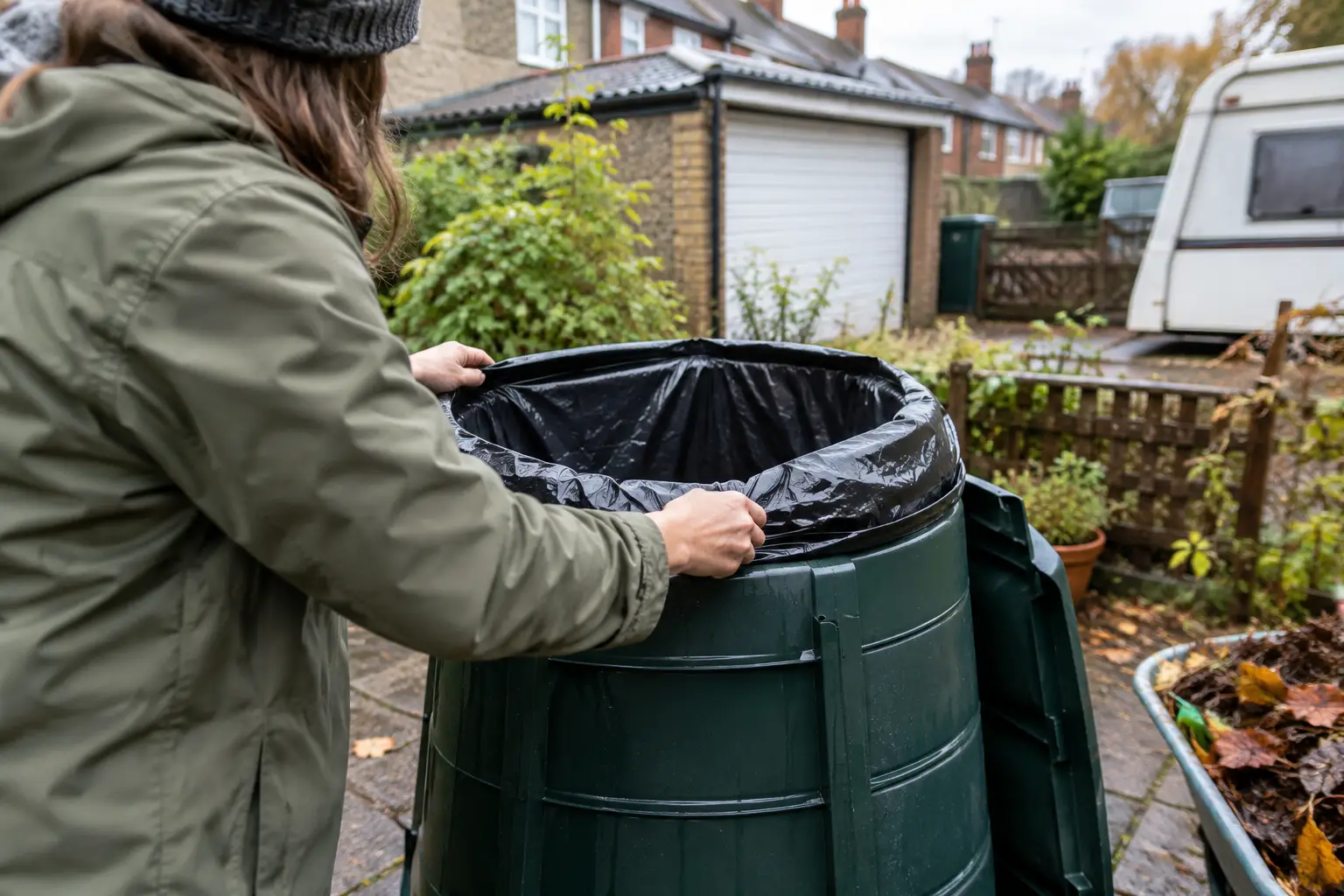
There is also an important difference between a kitchen-caddy liner and a liner for a garden compost bin. Most home compost bins, compost heaps and tumblers should not be lined at all. Compost needs contact with the ground or good airflow and drainage, depending on the set-up. Putting a bag inside a large garden bin can trap moisture, slow the process and create a soggy, smelly layer.
Food-waste rules vary across the UK. Some councils ask households to use compostable liners, some accept only food waste loose in the caddy, and others permit newspaper or plain paper caddy liners. A bag that is accepted in one borough may be removed as contamination in another.
Before buying a pack, check the guidance printed on your indoor or outdoor caddy, your council collection information, or the instructions provided with your food-waste service. This is the most useful rule in any guide to compost bin liners: local collection guidance comes before the wording on the packet.
If your council accepts liners, it may specify a recognised standard, a particular size or a compostable logo. Follow that advice closely. Commercial composting sites process material differently from a compost heap at home, so the collection service needs bags that break down within its own system.
Packaging claims can be confusing, especially when you are trying to make the greener choice. The word “biodegradable” simply means a material can break down eventually under certain conditions. It does not tell you how quickly it will happen, where it should be disposed of, or whether it is suitable for food-waste processing.
For kerbside food-waste collections, look for liners clearly marked as compostable and suitable for food caddies. In the UK, bags carrying recognised compostability certification are generally the clearer choice, but your council’s rules still apply.
“Home compostable” is a separate claim. These products are intended to break down in a well-managed home compost system, though they still need the right balance of warmth, moisture and time. Do not put ordinary plastic bags, carrier bags, bin bags or supposedly biodegradable plastic into a compost bin unless your council specifically says they are accepted. They can leave fragments behind and may disrupt the recycling or composting process.
Paper is another useful option where permitted. A few sheets of newspaper, a paper caddy liner or a folded piece of plain kitchen paper can soak up moisture at the base of the caddy. Avoid glossy magazines, plastic-coated paper and heavily printed packaging.
The best liner is not necessarily the biggest or thickest one. It is the one that fits your caddy properly and holds the amount of food waste your household produces between collections.
A liner that is too small will slip down into the caddy or tear around the rim. One that is too large can fold over itself, collect liquid in the corners and waste material. Measure the inside of your caddy or check its litre capacity before choosing. Many kitchen caddies are small, but sizes differ enough that guessing can be frustrating.
Strength matters most for wet waste. If your household regularly disposes of tea bags, fruit scraps, cooked leftovers and coffee grounds, choose a liner designed for food waste rather than a very thin general-purpose compostable bag. Compostable liners are not meant to last forever, but they should comfortably handle a few days of normal use when stored sensibly.
Keep unopened liners somewhere cool and dry. Heat, damp and sunlight can weaken them before they are even used. A drawer or cupboard is better than a shed shelf, sunny windowsill or damp utility room.
Even a decent liner can fail if it is carrying more liquid than it was designed for. The simplest fix is to drain wet scraps first. Let tea bags cool and drip dry, strain sauces where practical, and avoid pouring liquids, cooking oil or soup into the caddy. These items can create leaks and are often not accepted in food-waste collections anyway.
Place the liner neatly around the rim of the caddy, rather than leaving a large loose section at the bottom. Then add a small layer of dry, accepted material if the contents tend to be wet. Plain paper or a little kitchen roll can help absorb moisture, provided your council allows it.
Do not pack scraps down hard. Food waste needs to be contained, not compressed into a heavy block that strains the bottom of the bag. If the caddy is full, take it out rather than trying to squeeze in one more plateful.
In warm weather, empty the indoor caddy more often. Fruit waste breaks down quickly in a hot kitchen, and no liner can fully prevent odours if food is sitting for days. Washing the caddy with warm, soapy water after emptying it also makes a real difference. Let it dry before fitting a fresh liner.
A liner is optional, not essential. If your council says food waste should go in loose, follow that rule and rinse the caddy regularly. Some households also prefer to line the base with newspaper rather than use a bag, especially if they produce only a small amount of food waste.
For a garden compost bin, add waste directly to the compost. Balance moist “green” materials such as vegetable peelings and grass cuttings with dry “brown” materials such as torn cardboard, dry leaves and small twigs. This gives air spaces in the mix and helps prevent the slimy, sour conditions that put people off composting.
Compostable caddy liners can sometimes go into a home compost heap if they are specifically labelled for home composting, but they may take longer to break down than food scraps. Tear them into smaller pieces and keep them in the active middle of the heap if you choose this route. If you want compost quickly, using fewer liners is often the easier option.
Fit a clean liner after each collection or caddy wash, keeping the roll close by so the job takes seconds. Add only the materials your council accepts, drain very wet waste and take the caddy outside before it becomes overfull. In summer, a quick midweek empty can be worth the extra trip.
For households with no food-waste collection, consider whether a small countertop caddy, a garden compost bin or a sealed container for approved scraps suits your routine best. The right approach depends on your space, the type of waste you make and how often you are happy to manage it.
A compost bin liner should make a useful household habit easier, not add another thing to worry about. Choose one that matches your council’s rules, fits your caddy and suits the amount of food waste you produce – then let the routine do the hard work.
