Address
86 Amesbury Road
Manchester M9 6JF United Kingdom
Find the best cat litter mats for your home, with practical advice on materials, size, cleaning and placement to keep tracked litter off floors daily.
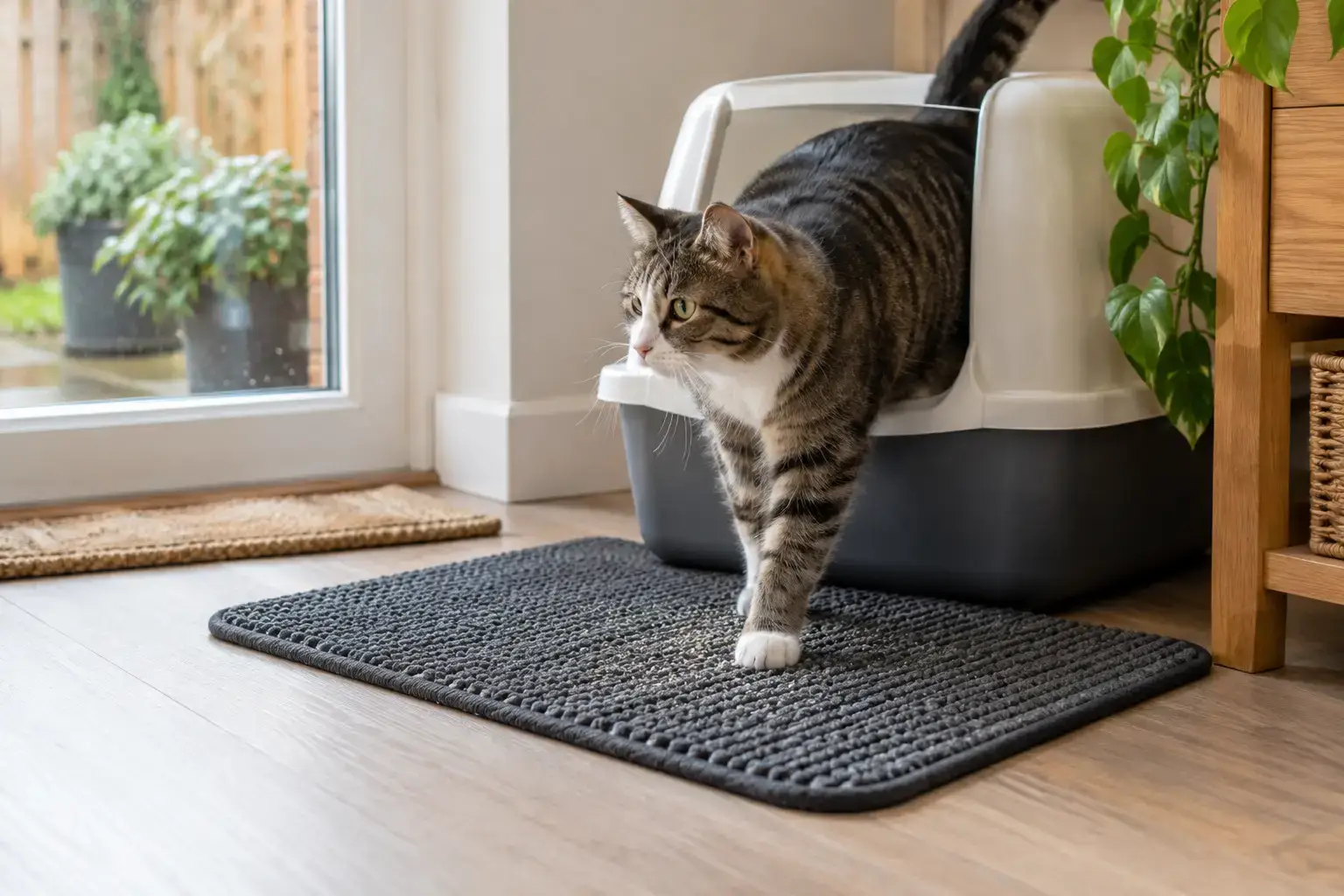
A few grains of litter on the floor may not seem like much – until they end up under bare feet, across the hallway or caught in the grooves of a hard floor. The best cat litter mats create a simple barrier between the tray and the rest of your home, catching loose granules before they get walked everywhere.
For busy homes, this is one of those small petcare upgrades that saves repeated sweeping and hoovering. The right mat is not necessarily the thickest, biggest or most expensive option. It needs to suit your cat’s paws, their litter type, the space around the tray and how much cleaning you are happy to do.
A useful litter mat should catch granules without becoming a nuisance in its own right. It needs enough texture to lift litter from paws, a stable base that does not slide across the floor, and a surface that is easy to empty and clean.
Size matters more than many people expect. Cats often step out of the tray, pause, then make a quick exit. A small mat directly in front of the tray may catch some litter, but it will not help much if your cat jumps out from the side. Choose one that extends beyond the entrance and offers enough landing space around the tray, especially for energetic cats or larger covered trays.
The material also makes a real difference. Some cats dislike unfamiliar textures and may step around a stiff or spiky mat if they can. If your cat is older, has sensitive paws or simply objects to change, a softer option can be the better choice even if it catches slightly less litter.
There is no single best style for every cat. The best cat litter mats for a tiled utility room may not suit a carpeted flat, a kitten or a cat that uses fine clumping litter. Start with how your cat leaves the tray and what comes out with them.
Honeycomb mats have a textured top layer with small holes, usually sitting over a solid waterproof base. Loose litter falls through the holes and collects underneath, so you can open the mat, pour the litter back into the tray or bin it, then wipe it clean.
This design is particularly handy for dry, granular litter and homes where a lot of litter is tracked around. It can hold a surprising amount before needing emptying. Look for a mat with a secure edge and a waterproof bottom layer, as urine leaks are never something you want reaching the floor underneath.
The trade-off is that some cats find the textured top uncomfortable. Check the hole size too: very large holes may not catch fine litter well, while a very firm surface can be less pleasant for sensitive paws.
PVC litter mats are often made with a looped, coil-like surface that grabs litter as your cat walks across it. They are lightweight, flexible and commonly easy to shake outside, making them a practical everyday choice.
They work well in dry areas and can be a budget-friendly option for a single-cat home. However, loose litter can get lodged in the loops, so they may need a firmer shake or a quick hoover more often than a double-layer mat. A PVC mat without a proper non-slip backing can also creep across smooth laminate or tile.
Silicone and rubber mats tend to have raised ridges, grooves or shallow pockets to catch litter. They are waterproof, durable and very straightforward to wash in the sink, bath or shower. If your cat occasionally misses the tray, this is a sensible material to consider.
These mats are often better for placing beneath the whole tray, rather than only in front of it. Their main limitation is that shallow ridges may not hold as much litter as a honeycomb design, particularly with a cat that loves to dig. Still, their easy-clean finish makes them a good low-fuss choice for a bathroom, kitchen or utility area.
Microfibre mats feel softer underfoot and can pick up fine dust and small particles well. They may suit cats that refuse firmer textured mats, and they can look less obviously pet-focused in a living space.
On the other hand, microfibre is less ideal for damp messes and needs washing regularly. If you use clumping litter, avoid leaving wet litter on the fabric, as it can stick and become awkward to remove. A washable mat with a waterproof backing offers more protection than a simple fabric rug.
Fine clumping litter, wood pellets, crystal litter and paper-based litter all behave differently. Fine litter tends to cling to paws, so a double-layer or close-textured mat can be effective. Larger pellets may bounce or roll, making a mat with a raised outer lip or deeper grooves more useful.
For carpeted rooms, choose a waterproof-backed mat. This protects against moisture while also preventing litter from being ground into the pile. On laminate, vinyl, tile or sealed wood, a grippy underside is essential. A mat that slides may startle your cat and make them reluctant to use the tray area.
If the tray sits on a floor with underfloor heating, avoid very thin plastics that can curl at the edges over time. A thicker silicone or quality PVC option is usually more stable. Always make sure the mat lies flat, as curled corners can become a trip hazard for people and pets alike.
Measure the tray area before ordering. As a basic rule, the mat should be at least as wide as the tray and extend 30 to 45 cm beyond the entrance. For top-entry trays, a mat placed on all sides can catch litter when your cat jumps down.
Put the tray in a quiet, easy-to-reach spot rather than squeezing it into an awkward corner. A litter mat cannot compensate for a location your cat dislikes. If they rush in and out because the tray is beside a noisy washing machine or in a busy corridor, more litter is likely to escape.
In multi-cat homes, it can help to give each tray its own mat rather than relying on one oversized mat between them. This keeps cleaning simpler and reduces the amount of litter carried from one tray area to another. For a tray inside a cabinet or enclosed unit, choose a mat that fits flush at the doorway and does not block the entrance.
A litter mat should make your routine easier, not create a weekly job you dread. Empty dry litter from it every day or two, depending on how many cats use the tray. Honeycomb designs can usually be tipped straight into the bin, while PVC and rubber mats can be shaken outdoors or hoovered.
Wash waterproof mats with warm water and a mild, pet-safe cleaner when needed. Rinse thoroughly and let them dry fully before putting them back. Strongly scented cleaning products can put some cats off using the tray, so plain, gentle cleaning is often best.
For fabric or microfibre mats, follow the care label and wash separately from household laundry where possible. Remove as much dry litter as you can first. A quick daily shake and a regular wash will stop trapped dust and litter residue from building up.
If litter still appears metres from the tray, the issue may be the mat’s size, not its texture. If it is gathering around the edges, go wider. If the mat is full after a day, move to a deeper, double-layer style or empty it more often.
Watch your cat as well. A cat that hops over the mat, walks around it or suddenly avoids the tray may dislike the feel beneath their paws. Try a softer, flatter mat and make sure it is not moving when they step on it. For older cats, a low-profile mat is kinder on stiff joints and easier to walk across.
A litter mat will not replace regular tray cleaning, but it can make the whole area calmer, cleaner and much quicker to manage. Pick a style that suits your cat first, then your floor, and you will spend less time chasing stray litter around the house.
