Address
86 Amesbury Road
Manchester M9 6JF United Kingdom
Our caravan awning guide helps you choose the right size, style and features, then pitch, secure and care for it through every UK holiday with less fuss.
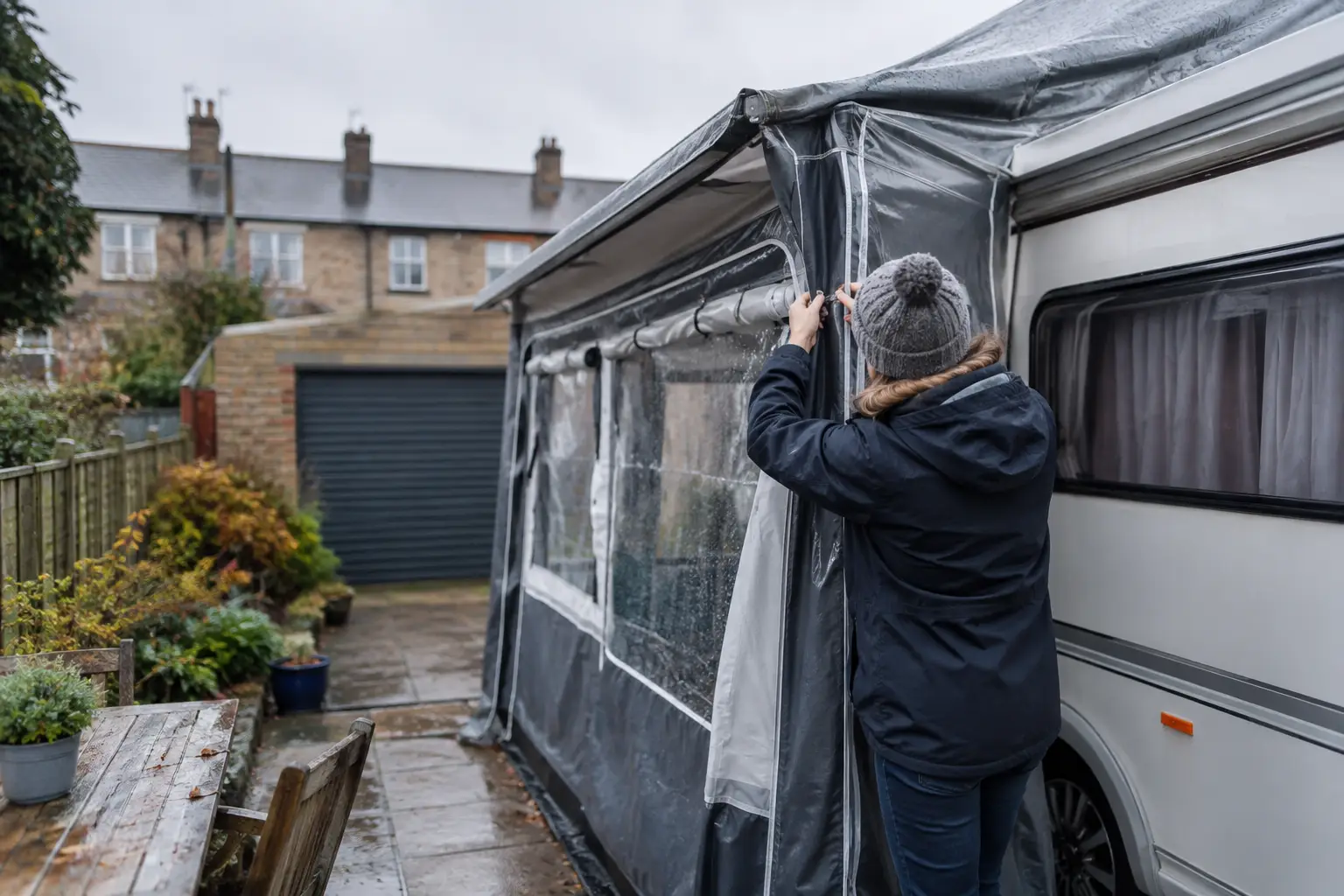
A good awning can turn a cramped caravan pitch into a proper holiday base: somewhere to leave muddy boots, eat when the weather turns, dry towels, or simply sit with a cuppa without squeezing around the table inside. This caravan awning guide cuts through the jargon, so you can choose one that suits your caravan, your touring habits and the British weather.
Before comparing fabrics, poles and prices, think about what you need the awning to do. A couple moving on every two or three nights will usually value quick pitching and a compact pack size. A family staying on one pitch for a week may be happier with more living space, room for bikes and wet coats, and a sturdier setup.
There is no single best caravan awning. The right choice depends on how often you travel, whether you tour mainly in summer or stretch the season into spring and autumn, how confident you are with setup, and how much storage space you have at home and in the caravan.
An awning is not just an extra room. It can also help keep the caravan cleaner and more organised. A groundsheet by the entrance gives everyone a place to take off footwear, while simple storage boxes stop the usual pile of folding chairs, dog leads and outdoor toys taking over the living area.
A full awning runs along most or all of the caravan rail. It offers the biggest enclosed space and feels closest to adding another room to your caravan. This makes it a strong option for longer stays, seasonal pitches and families who need a dining area, sleeping annex or somewhere to store bulky kit.
The trade-off is weight and setup time. A full awning can be a sizeable job for one person, particularly in wind or rain, and it takes up more locker space. If you only stop overnight or move site often, the extra room may not justify the effort.
Porch awnings cover a smaller section of the caravan side, usually around the door. They are a popular middle ground: enough room for shoes, coats, a small table or a couple of chairs, but lighter and quicker to manage than a full model.
For many weekend and summer tourers, a porch awning is the easy, practical answer. Check carefully that it does not block windows, vents or access to your door before buying.
Air awnings use inflatable beams rather than traditional poles. You slide the awning into the rail, peg it out, then inflate the beams with the supplied pump. They can be much quicker to pitch, especially for solo travellers or anyone who would rather avoid assembling a frame section by section.
They are not automatically better for everyone. Air beams are usually heavier than a basic lightweight pole awning, and you need to carry a pump and take care not to overinflate in hot sunshine. Choose a model with reliable valves, strong pegging points and repair patches, then inspect it before each trip.
Traditional pole awnings remain a dependable option. They can be excellent value, and individual poles are often straightforward to replace if one gets bent or misplaced. Once you know the routine, pitching becomes much faster than it first appears.
The downside is the learning curve. Matching poles to the right places and lifting the frame into position can be fiddly, especially in poor weather. Label poles or keep them grouped in their bag to make the next setup less of a puzzle.
Sizing is where costly mistakes happen. Full awnings are sized by your caravan’s A-measurement: the distance around the awning rail from ground level at one side, over the roof, to ground level on the other. Your caravan handbook may list it, but measuring your own caravan is safest if you are unsure.
Use a flexible tape measure and follow the rail closely, rather than measuring in a straight line. Park the caravan on level ground and, if possible, have someone hold the tape at the other end. Manufacturers use different size bands, so match your measurement to the specific brand’s chart rather than assuming one make’s size will fit another.
Porch awnings are usually chosen by rail length and fitting height. Measure the usable straight section of rail, taking account of windows, lights and roof curves. Also check the height from the ground to the rail. An awning that is technically the right width can still fit poorly if its height range is wrong.
British weather can deliver sunshine, wind and heavy rain on the same afternoon, so fabric matters. Polyester awnings are generally lighter, dry faster and suit regular touring. Acrylic fabrics tend to breathe better and can feel more comfortable on longer stays, but may cost more and need more drying time before storage.
Look for taped seams, strong zips, reinforced pegging points and properly covered roof joins. A decent hydrostatic head helps indicate water resistance, though good pitching matters just as much. Water will find its way through a loose roof panel or poorly tensioned seam no matter what the label promises.
Useful features are the ones that suit your routine. Large doors make loading chairs and prams easier. Mesh panels improve airflow and help keep insects out. Removable front panels offer flexibility on warm days. A built-in canopy can create a sheltered doorway, although it may need extra poles or straps in breezy conditions.
Do not overlook the practical extras. A breathable groundsheet, carpet, storm straps, a rubber mallet, decent pegs and a peg puller make a noticeable difference. Standard pegs may struggle on hardstanding, while soft grass can need longer or screw-in pegs. Take a small mix rather than hoping one type will suit every pitch.
Start by choosing the most level, clear area beside the caravan. Clear away sharp stones and check where the door will open. If it is windy, position the caravan first, apply the handbrake and make sure it is stable before starting work.
Clean the awning rail with a soft brush or cloth. Grit in the channel makes threading difficult and can damage the beading. Feed the awning steadily through the rail with one person guiding from each end if possible. Avoid pulling hard on windows or fabric panels.
With a pole awning, assemble the basic frame before fully tensioning it. With an air awning, inflate the main beams to the manufacturer’s recommended pressure. Peg the rear corners first, then the front corners, keeping the fabric square as you go. Work around the sides, adjusting the tension gradually instead of pulling one point tight too early.
The roof should be taut enough for rain to run off, but not stretched to its limit. Add roof rafters or tension poles where supplied, then fit storm straps if the forecast is unsettled. On arrival, after a few hours and again after overnight rain, walk around and recheck the pegs. Fabric settles, and a small adjustment can prevent puddling or flapping.
An awning is not a permanent structure, even on a long holiday. Strong gusts can damage poles, tear pegging points or put strain on the caravan rail. Always follow the site rules and pay attention to forecasts. If high winds are expected, remove loose panels, add approved storm straps and consider taking the awning down rather than hoping it will cope.
Never leave an awning unattended for long periods in uncertain weather. Close windows and doors before going out, and keep drainage channels clear. In heavy rain, check that water is not collecting on the roof. Gently raise or retension the relevant area from inside if needed, but do not push hard against a water-filled roof panel.
Keep heaters, barbecues and cooking appliances out of the enclosed awning unless they are specifically designed and safely ventilated for that use. Carbon monoxide and fire risks are not worth cutting corners over. Use a suitable outdoor cooking area instead, and keep a clear route to the caravan door.
Packing an awning away wet is sometimes unavoidable, particularly on a touring holiday. The key is to unpack and dry it as soon as you get home. Hang it over a washing line, airer or clean fence on a dry day, opening folds so trapped moisture can escape.
Brush off mud, wipe down the mud skirt and let every panel dry completely before folding. Storing damp fabric can lead to mildew, unpleasant smells and weakened coatings. Check zips, valves, poles, pegs and guy lines while everything is out, then replace missing parts before your next trip rather than discovering the problem on site.
A well-chosen awning should make caravan life feel simpler, not give you another awkward job to manage. Pick the space you will genuinely use, practise pitching it once before your first holiday, and you will arrive on site ready to put the kettle on sooner.
