Address
86 Amesbury Road
Manchester M9 6JF United Kingdom
Our garden watering equipment guide helps you choose hoses, sprinklers and timers for healthier plants, less waste and easier summer care at home daily.
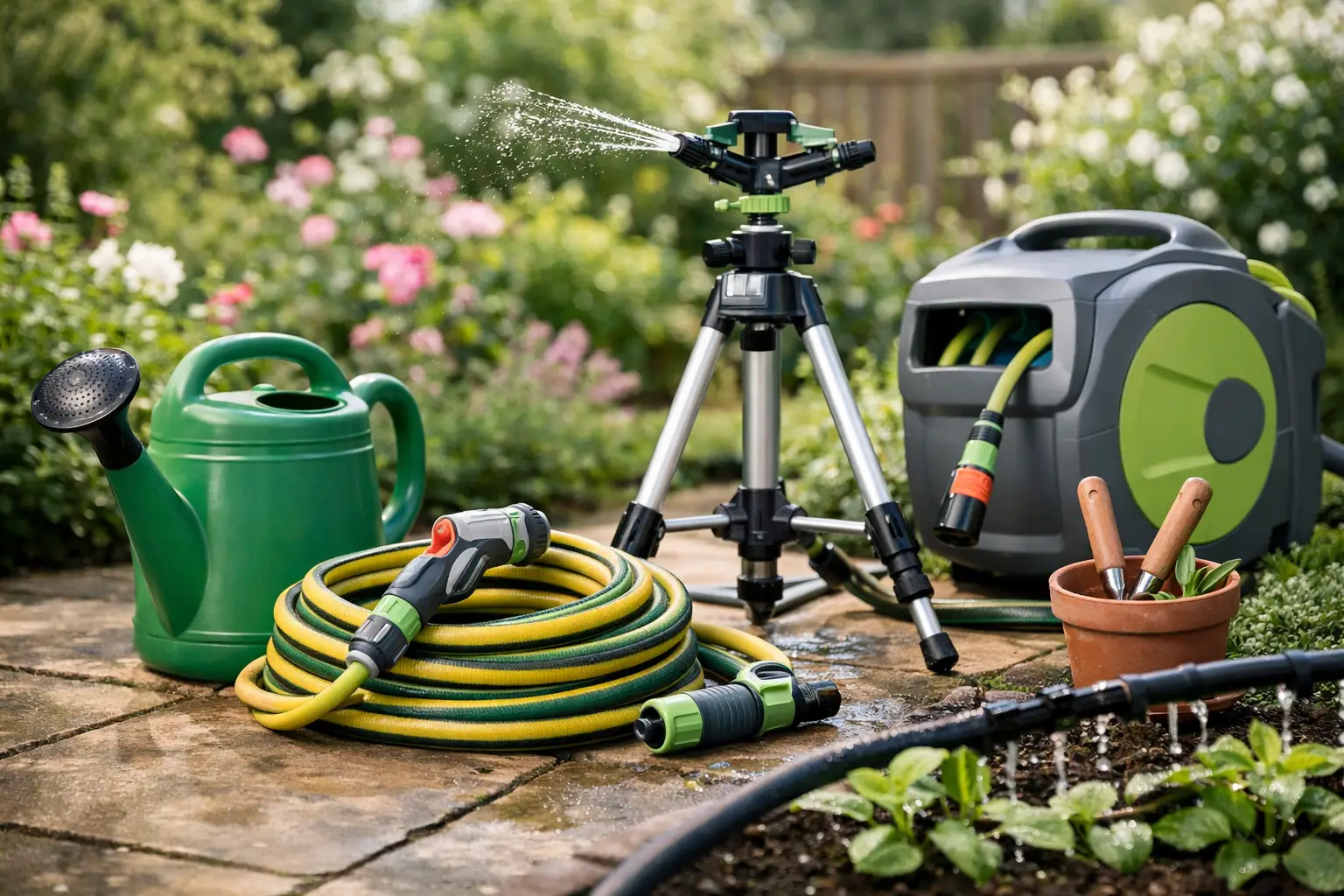
A drooping tomato plant and a waterlogged border can happen in the same garden. That is why a good garden watering equipment guide starts with your space, your plants and the way you actually spend time outdoors – not with the biggest sprinkler on the shelf. The right kit makes regular watering quicker, cuts waste and helps your garden cope when a warm, dry spell arrives.
For most UK households, a simple set-up is all that is needed: a reliable hose, a useful spray attachment and a watering can for the jobs that need a gentler hand. Add a timer, sprinkler or drip system only where it solves a real problem. EasyPeasyMate is all about practical fixes, and garden watering should feel exactly that way.
Before choosing equipment, think about what needs watering and where the outdoor tap sits. A compact patio garden with pots has very different needs from a long lawn, vegetable patch and greenhouse. Measure the rough distance from tap to farthest bed, allowing extra length to go around paths, sheds and furniture. A hose that is only just long enough is usually frustrating to use.
Also consider the soil. Sandy soil drains quickly, so plants may need slower, more frequent watering. Clay holds moisture for longer, but can become compacted and shed water if it is very dry. In both cases, a slow soak around the roots is more useful than a quick daily spray over the leaves.
It helps to divide your garden into three simple groups: containers and hanging baskets, which dry out fastest; vegetables and newly planted flowers, which need steady moisture while establishing; and lawns or mature borders, which can usually cope with less frequent watering once rooted in.
A hosepipe is the starting point for most gardens. Choose its length based on your furthest watering point, but avoid buying far more than you need. Longer hoses are heavier, take more storage space and can reduce water flow slightly, especially on lower-pressure supplies.
A standard hose suits general jobs such as watering beds, filling a pond-safe container or rinsing muddy tools. If you are short on storage, an expandable hose can be handy because it takes up less room when empty. The trade-off is that it may not feel as tough as a traditional hose, so it is best stored away from sharp edges and winter frost.
A hose reel or cart is worth considering if your hose tends to become a tangled heap by the tap. It protects the hose, makes winding up easier and keeps paths clearer. Wall-mounted reels are neat for smaller gardens, while wheeled carts work well where you need to move around a larger plot.
The small fittings matter more than they seem. A tap connector, hose connector and water-stop connector let you change attachments without wrestling with the tap every time. Water-stop fittings are particularly useful because they stop the flow when you remove a spray gun or sprinkler.
Check the size and thread of your outdoor tap before buying. Most domestic taps are straightforward, but older fittings or indoor taps may need an adaptor. If a connector leaks, check that the rubber washer is present, clean and seated properly before assuming the whole fitting needs replacing.
A spray gun turns a basic hose into a much more flexible tool. Look for adjustable patterns such as shower, mist, jet and flat spray. The shower setting is a good all-round choice for borders and containers because it imitates rainfall without blasting soil out of pots. Mist is gentler for seedlings, while jet is useful for cleaning paving, rather than watering plants.
For deep borders, hanging baskets or awkward corners, a watering lance gives you extra reach. It is also easier on the back than leaning over plants with a short nozzle. Choose a trigger that feels comfortable in your hand, particularly if you water for more than a few minutes at a time.
A watering can is still one of the most useful bits of garden kit. It gives you control where a hose is too forceful, especially for seedlings, houseplants moved outside for summer, herbs and containers near the back door. A rose attachment spreads the flow into a soft shower and reduces soil disturbance.
Plastic cans are light and practical, while metal options can be sturdier but heavier when full. Capacity matters too. A large can means fewer trips to the tap, but a smaller one may be more comfortable for children, older gardeners or anyone carrying water up steps. Two medium-sized cans can be more useful than one oversized one.
Sprinklers can save time on lawns and larger beds, but they are not automatically the most efficient option. They send water through the air, so wind and evaporation can waste some of it. Use one early in the morning or later in the evening, when conditions are cooler and calmer.
An oscillating sprinkler sends a fan of water back and forth and is useful for rectangular lawns. A rotating or pulse sprinkler covers wider, rounder areas and is often better for larger spaces. Set the sprinkler so it waters grass or planting, not fences, patios and your neighbour’s side of the hedge.
For an established lawn, watering deeply once or twice a week during dry weather is generally better than a light sprinkle every day. However, do not panic at brown grass in a dry spell. Lawns often recover when rain returns, while newly laid turf needs more careful and consistent attention.
If you have greenhouse crops, raised beds, rows of vegetables or a lot of containers, drip irrigation is one of the easiest ways to reduce watering time. Small emitters or perforated hose sections deliver water directly to the soil near the roots. Less water lands on leaves, which can be helpful for plants prone to fungal problems.
A soaker hose is a straightforward choice for long borders and vegetable rows. Lay it along the soil, cover lightly with mulch if suitable, and let it run slowly. Drip systems offer more precision, as individual emitters can be positioned beside each plant. They take a little longer to set up, but pay off when summer jobs begin piling up.
These systems are not completely maintenance-free. Check for blocked emitters, kinks and loose connections, and flush the line occasionally. In very hard-water areas, mineral build-up can affect small outlets over time.
A tap timer is one of the best upgrades for busy households, holidays and hot weeks when pots dry out quickly. It can run a sprinkler or drip system at set times, so watering happens before work or while you are away. Battery-powered timers are common and simple to programme, but replace batteries before the main growing season rather than waiting for them to fail.
A timer cannot judge the weather for you. If heavy rain is forecast, pause it. If you use a water butt or low-flow source, make sure the set-up has enough pressure to work properly. Timers are most effective when paired with drip irrigation, where water is delivered slowly and exactly where plants need it.
Good equipment works best alongside a few low-effort habits. Water at the base of plants, ideally in the morning, so roots get the moisture and foliage has time to dry. A layer of mulch around beds helps keep water in the soil and can reduce how often you need to reach for the hose.
Collecting rainwater in a water butt is another useful option for containers and general garden jobs. Rainwater is free, and it reduces demand on the mains supply. Just fit a secure lid or cover to keep debris out and reduce access for children and animals.
Avoid watering by routine alone. Push a finger a few centimetres into the compost or soil first. If it is still damp below the surface, wait. Plants need water at their roots, not a daily shower out of habit.
At the end of the warmer months, drain hoses, sprinklers and irrigation lines before freezing weather arrives. Water left inside can freeze, expand and damage fittings. Store spray guns, connectors and timers somewhere dry, and keep spare washers nearby for quick repairs next spring.
The best watering set-up is the one you will use without putting it off. Choose the basics that suit your garden now, then add a timer or drip system when your routine calls for it. A few well-chosen pieces of equipment can leave you with healthier plants and more time to enjoy the garden rather than manage it.
