Address
86 Amesbury Road
Manchester M9 6JF United Kingdom
A guide to household first aid for UK homes: build a useful kit, act calmly in common emergencies and know when to call 111 or 999 for help when needed.
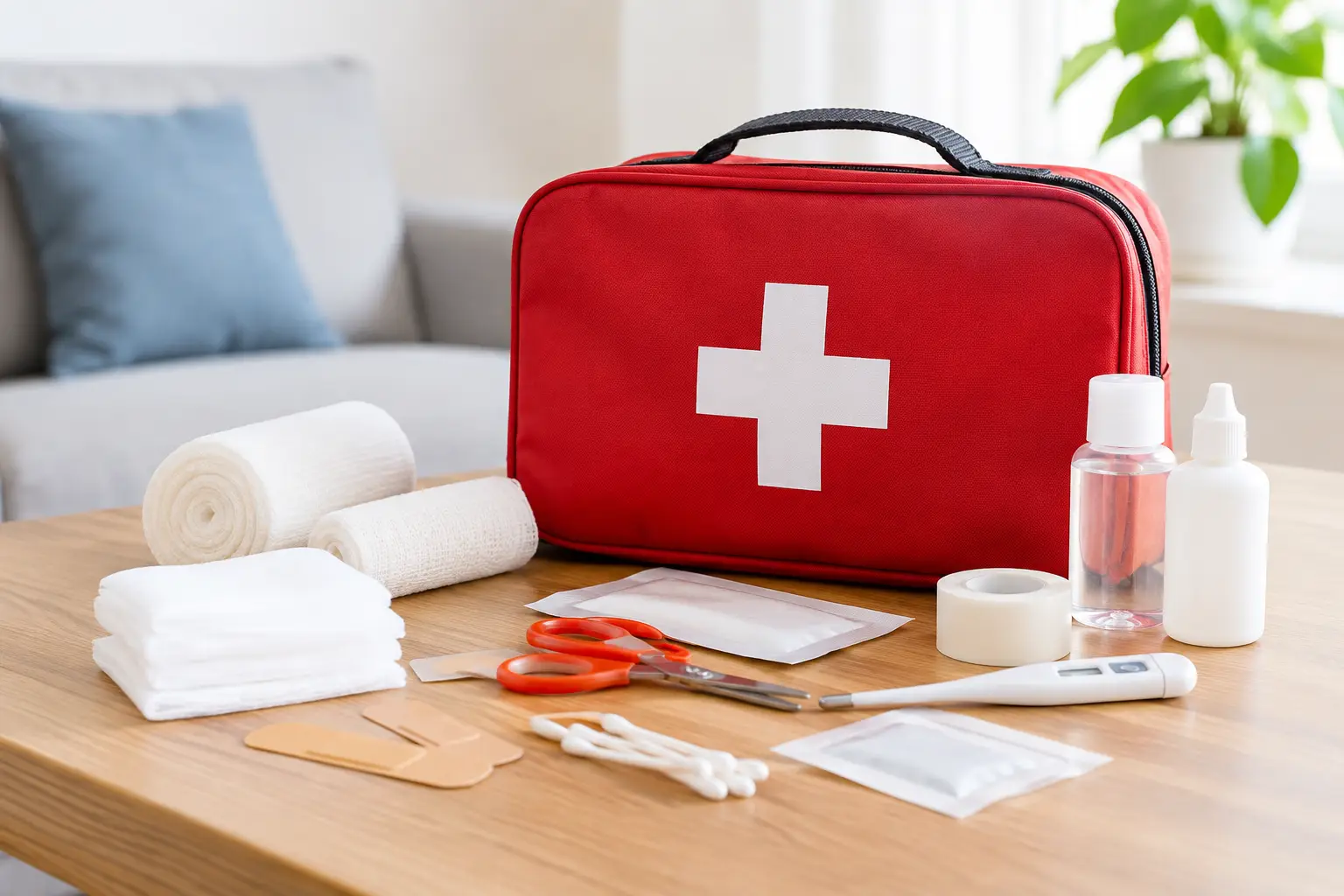
A knocked knee after school, a kitchen cut while making tea, a splinter picked up in the garden – these are the moments when a well-stocked first aid kit saves a lot of fuss. This guide to household first aid is for ordinary UK homes that want simple, sensible preparation, without filling a cupboard with things they will never use.
First aid is about giving safe, immediate care while deciding what needs professional help. It does not mean trying to diagnose an injury or treating something beyond your confidence. Keep the job simple: stay calm, protect yourself and the injured person, and get help promptly when the situation calls for it.
A kit is only useful if everyone can find it. Choose one dry, easy-to-reach cupboard or drawer and tell the household where it lives. It should be out of reach of young children, but not locked away so thoroughly that an adult has to hunt for a key during a minor emergency.
It also helps to keep essential numbers visible nearby. For urgent, life-threatening emergencies, call 999. If you need urgent medical advice but it is not an emergency, NHS 111 can help you decide what to do next. When someone is unconscious, having trouble breathing, bleeding heavily, having a seizure, or showing signs of a serious allergic reaction, do not wait to see whether they improve.
Consider the people and routines in your home, too. A household with a toddler, a dog and a busy garden needs slightly different supplies from a couple in a flat. If someone has allergies, diabetes, prescribed medicines or a known medical condition, make sure close family members understand their care plan and where it is kept.
Ready-made kits are a handy starting point, but checking the contents yourself makes them much more useful. A practical home kit should cover small cuts, grazes, minor burns and everyday bumps. Store everything in a clean, clearly labelled box or zip case that can be carried to the kitchen, garden or car when needed.
Include these core items:
Keep any medicines separate from dressings and follow the label carefully. Paracetamol and ibuprofen can be useful for adults and children when appropriate, but age limits, health conditions and other medicines matter. Never give aspirin to anyone under 16 unless a clinician has told you to do so. Check expiry dates regularly, and keep medicines in their original packaging so dosage instructions are always clear.
For homes with children, it is worth adding child-friendly plasters and a small distraction such as a sticker sheet. It sounds minor, but calming a frightened child often makes cleaning and dressing a scrape far easier.
Avoid relying on loose, unidentified tablets, old prescription medication or creams with no clear instructions. Cotton wool can leave fibres in a wound, and hydrogen peroxide or harsh antiseptics can irritate healthy tissue. For most small cuts and grazes, clean running water, a sterile dressing and sensible observation are the better route.
Wash your hands or use gloves before dealing with blood or bodily fluids. Ask the person what happened, check whether they feel faint or unwell, and deal with the most obvious problem first. If an injury looks severe, trust that instinct and seek help.
For a small cut or graze, apply gentle pressure with sterile gauze or a clean dressing until bleeding slows. Rinse the wound under clean running water to remove visible dirt, then pat the surrounding skin dry and cover it with an appropriate plaster or dressing.
Do not try to remove deeply embedded objects. If blood is spurting, soaking through dressings, or does not stop after firm pressure, call 999. Get advice for bites, puncture wounds, contaminated wounds, or wounds that are gaping, as these may need professional treatment.
Cool the burn under cool or lukewarm running water for 20 minutes as soon as possible. Remove jewellery or clothing near the area if it is not stuck to the skin. Do not use ice, butter, toothpaste or fluffy dressings – they can make matters worse.
Cover the burn loosely with cling film laid over it, rather than wrapped tightly around a limb. Seek urgent medical advice for burns that are larger than the injured person’s hand, deep, blistered, electrical or chemical, or on the face, hands, feet, joints or genitals. Always take burns in babies and young children seriously.
For a mild knock or sprain, rest the area and use a wrapped cold pack for short periods. Never place ice directly on skin. If a limb looks bent, there is severe swelling, numbness, an inability to use it, or pain is intense, keep the person still and seek medical help. Do not try to straighten a suspected broken bone.
Wash out dust or a loose eyelash with clean water or sterile saline. Encourage the person not to rub their eye. If there is a chemical splash, rinse continuously with clean water for at least 20 minutes and get urgent help. Never attempt to remove an object embedded in the eye.
Children can deteriorate quickly, and their smaller bodies need extra care. Keep cleaning products, medicines, button batteries and sharp tools securely stored. If a child may have swallowed a battery, chemical, medicine or small magnet, seek urgent medical advice straight away, even if they appear well. Do not make them sick unless a medical professional tells you to.
Pets deserve a separate, basic kit with pet-safe dressings, saline and a tick remover, but human painkillers are not automatically safe for animals. Call a vet for guidance after a bite, suspected poisoning, heatstroke, breathing problems or an injury that causes limping or distress.
Set a reminder to check the kit twice a year, perhaps when the clocks change. Replace used items, remove out-of-date supplies and top up the plasters that somehow disappear first. Take the kit with you when camping, caravanning or tackling a full day in the garden, and keep a smaller version in the car.
A short first aid course is one of the most useful practical skills an adult can learn, especially for parents, carers and anyone who spends time outdoors. Supplies help, but knowing how to use them calmly is what makes the real difference.
The aim is not to prepare for every possible event. It is to make everyday accidents less stressful: a clean kit, clear thinking and the confidence to call for help when a situation is more than a simple plaster can handle.
