Address
86 Amesbury Road
Manchester M9 6JF United Kingdom
Our guide to pet nail clippers helps you choose the right style, trim safely and keep cats, dogs and small pets comfortable at home every time with less fuss.
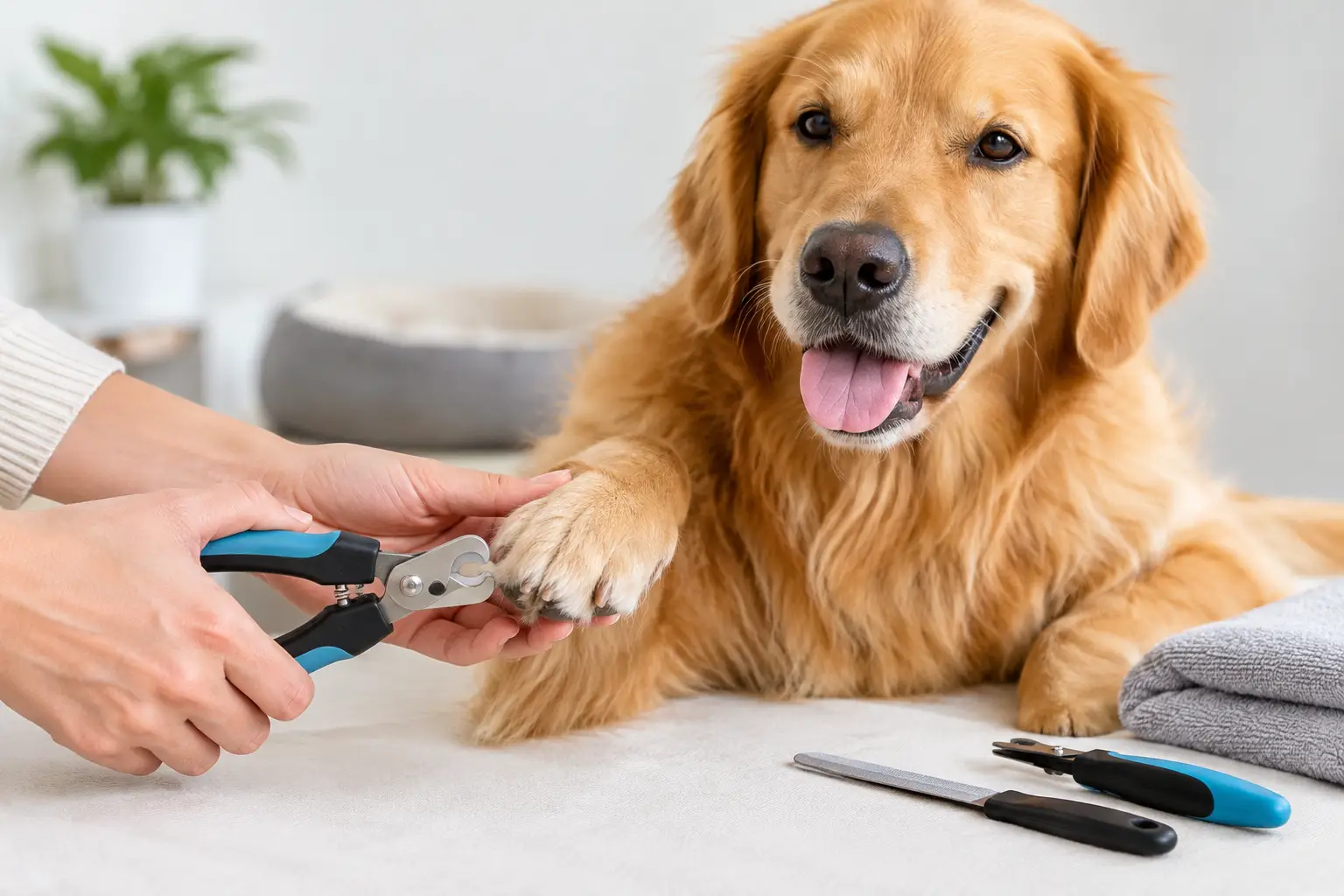
A clicking sound on the kitchen floor, snagged fabric on the sofa, or a paw that seems to slip on smooth flooring can all point to one small job that has been put off: a nail trim. This guide to pet nail clippers keeps the choice simple, so you can pick a tool that suits your pet and make grooming feel less like a wrestling match.
A good pair of clippers is a practical cupboard essential for many pet owners. The right design gives you control, makes a clean cut and helps keep the session quick. The wrong one can pinch, crush or make you nervous before you have even started.
Pet nail clippers are not one-size-fits-all. Your choice should reflect your pet’s size, nail thickness and temperament, rather than simply choosing the biggest or cheapest tool on the shelf.
Scissor-style clippers look like small, sturdy scissors with curved blades. They are often a sensible choice for cats, rabbits, guinea pigs, puppies and smaller dogs because they offer a clear view of the nail and a controlled cut. They can also work well on medium dogs with fine or average-thickness nails.
Look for sharp stainless-steel blades and handles that sit comfortably in your hand. A non-slip grip is particularly useful if your pet wriggles or if you are trimming several pets in one go.
Guillotine clippers have a small hole for the nail. When you squeeze the handle, a blade moves across the opening to trim the tip. They can be neat and easy to use on small, slim nails, especially when you are confident about where to position the claw.
That said, they are not usually the best pick for large dogs or very thick nails. The nail needs to fit comfortably through the opening, and a dull blade can crush rather than slice cleanly. Replacement blades are useful where available, but many owners find scissor clippers more versatile for regular home use.
Larger dogs often need plier-style clippers with strong handles and a spring mechanism. These are built for thicker nails and reduce the amount of force needed from your hand. Choose a size that gives you leverage without feeling oversized or awkward.
A safety guard can be helpful for beginners, but treat it as a guide rather than a guarantee. Nails vary in shape, and the guard cannot tell where the quick begins. Good visibility and small, careful trims still matter most.
An electric nail grinder gently files the nail down rather than cutting it in one motion. It can be handy for smoothing sharp edges after clipping, for dark nails where you want to take off tiny amounts, or for pets that dislike the snap of clippers.
The trade-off is noise, vibration and time. Some animals accept a grinder happily after a few short introductions; others find the sound more worrying than clippers. Keep sessions brief, avoid catching fur in the moving part and stop if the tool becomes warm.
A label saying “for dogs” is only a starting point. A small terrier may have surprisingly tough nails, while an older indoor cat may have delicate, curved claws. Check the width of the cutting area, the sharpness of the blade and whether you can hold the clippers steadily at the right angle.
For cats, compact scissor clippers are often easiest. Their claws are narrow and hooked, and only the sharp tip usually needs attention. For dogs, the choice depends more on body size and nail density. Small dogs may suit scissor clippers, while medium and large breeds generally need a stronger plier-style pair.
Small pets need extra care. Rabbit, guinea pig and bird nails are tiny, and their quick can be close to the tip. Use a suitably small tool, work in good light and trim only the very end. If you are unsure, ask a vet or experienced groomer to show you once before trying at home.
The best pet nail clippers make a straightforward job easier, not more complicated. Prioritise sharp blades, a comfortable handle and a size that feels secure in your hand. Spring-loaded clippers can reduce strain, while a locking catch is useful for safe storage.
Avoid clippers with loose hinges, blunt-looking edges or handles that force your fingers into an uncomfortable position. A clean, decisive cut is kinder to your pet than repeated squeezing with a poor-quality tool. Keep a nail file or grinder nearby if your pet’s nails tend to leave rough points after trimming.
It is also worth keeping styptic powder or a pet-safe blood-stopping product in your grooming kit. It is there for the occasional accident, not because you expect one. If you cannot get bleeding to stop promptly, or a nail is torn rather than simply cut too short, contact your vet.
The tool matters, but preparation often decides whether grooming goes smoothly. Choose a quiet time when your pet is relaxed, perhaps after a walk for a dog or when your cat has settled after play. Use a bright room, or have a lamp nearby, so you can see the nail clearly.
Let your pet inspect the clippers first. Offer a treat, touch the clippers gently to a paw, then put them away. Repeat this over a few days if needed. There is no prize for finishing all the nails at once, especially with a nervous pet. One paw, or even one nail, can be enough for an early session.
For dogs, having a second calm person offer treats can help. For cats, a towel around the body may provide reassurance and keep sharp claws from appearing out of nowhere, but do not restrain them forcefully. If your pet is distressed, take a break and try again later.
Hold the paw gently but firmly, separating the toe you are working on. For pale nails, look for the pink area inside the nail. This is the quick, which contains blood vessels and nerves. Trim a small amount below it, at a slight angle, and check the cut surface before taking any more.
Dark nails require more patience because the quick is not visible from the outside. Take off only a tiny slice at a time. As you get closer to the quick, the centre of the cut nail may look darker or show a small pale or grey circle. That is your sign to stop.
Do not forget dewclaws. These sit higher on the inside of the leg and may not wear down naturally on walks. Left unattended, they can curl around and grow into the skin.
If you accidentally nick the quick, stay calm. Apply styptic powder according to its instructions and give your pet a moment to settle. A small amount of bleeding can look alarming but is usually manageable. Lots of bleeding, ongoing pain, limping or swelling deserves veterinary advice.
There is no fixed calendar that suits every animal. Active dogs walking regularly on pavements may wear their nails down, although dewclaws still need checking. Dogs that mostly walk on grass, older pets, indoor cats and small animals often need more regular attention.
As a practical rule, check nails every two to four weeks. For dogs, nails that tap loudly on hard floors or touch the ground while standing are a prompt to inspect them. Cats often benefit from a quick check every couple of weeks, particularly if they are indoors. Frequent small trims are easier than waiting until nails become long and the quick grows further towards the tip.
After each use, wipe the clippers clean and dry before locking them away. A drop of suitable tool oil on the hinge can help keep the action smooth, but keep any lubricated tool well out of reach of pets and children. Replace clippers once the blades become dull, chipped or hard to align.
A little routine turns nail care into another easy household task. Start small, keep the rewards handy and use clippers that feel right in your hand. Before long, your pet may still not call it their favourite activity, but it can become a calm, quick part of looking after them.
