Address
86 Amesbury Road
Manchester M9 6JF United Kingdom
Our guide to windscreen de-icer explains what works, how to use it safely and how to stop icy mornings slowing down your journey to work or school daily.
A clear windscreen is not a nice-to-have on a frosty morning – it is what lets you see cyclists, pedestrians and the car pulling out at the end of your road. This guide to windscreen de-icer keeps the job simple: use the right product, give it a moment to work and clear the glass properly before setting off.
A bottle of de-icer and a decent ice scraper take up very little room in the car, yet they can save a lot of cold fingers, wasted time and steamed-up frustration. The trick is knowing where de-icer helps, where it does not, and why a few common shortcuts can make a winter morning harder than it needs to be.
Most ready-to-use windscreen de-icers contain alcohol-based ingredients that lower the freezing point of water. When sprayed onto frost or thin ice, the liquid loosens and melts it so it can be wiped away with a scraper or wipers. It is designed for glass, and it is especially handy when the frost has formed overnight.
It is not the same as screenwash. Screenwash is for the washer reservoir and helps clean the windscreen while driving. De-icer is normally sprayed directly onto the outside of the glass when the car is stationary. Keeping both to hand means you are prepared for the driveway as well as the road.
De-icer works best on ordinary frost, light ice and frozen condensation. A thick layer of ice may need a second application and some scraping. That is still quicker and safer than attacking the windscreen with force or trying to drive while peering through a small cleared patch.
Start the car only if you need to run the demister, and stay with it while the engine is running. Make sure the vehicle is in a safe, well-ventilated place and do not leave it unattended on the drive. Switch on the front and rear demisters, then clear the outside glass.
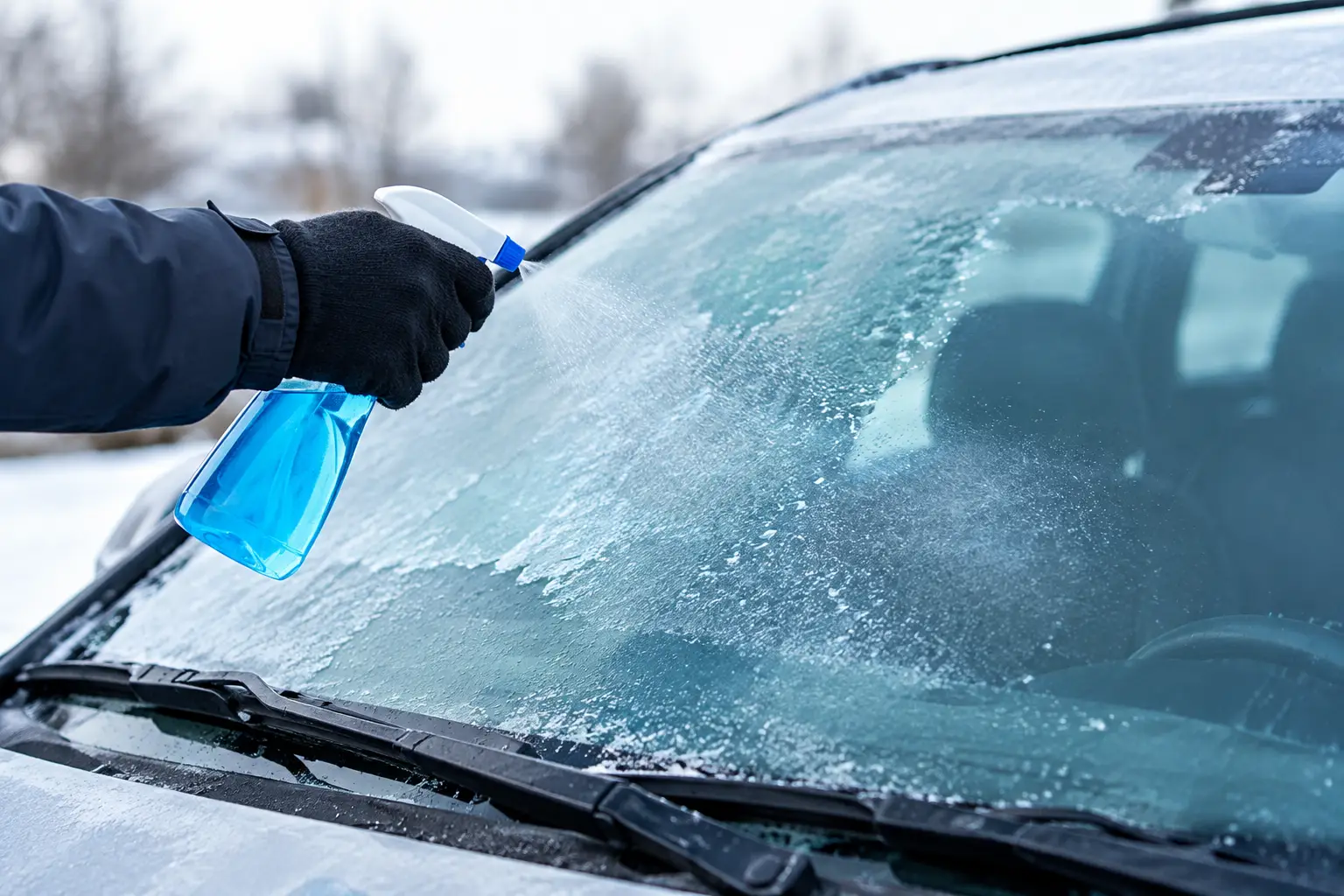
Shake the de-icer if the label advises it. Spray an even layer over the windscreen, starting at the top so the liquid can run down across the frost. Leave it for the short time stated on the bottle. There is no need to soak the car – a light, even coating is usually enough.
Use a plastic ice scraper to lift away loosened ice. Work across the whole windscreen rather than clearing a narrow viewing hole. Then check the side windows, mirrors, rear screen, lights and number plates. You need a proper view all around the vehicle, not just straight ahead.
Before using the wipers, make sure they are free from the glass. Running frozen wipers can damage the rubber blades or strain the wiper mechanism. Once the glass is clear, use winter-ready screenwash to remove any remaining film and leave a clean finish.
Keep it straightforward: spray, wait, scrape, check, then drive. Allow a few extra minutes when frost is forecast, especially if you need to get children to school or catch an early shift. Rushing is when people miss ice on mirrors or leave a dangerous layer on the roof.
If you park on a slope, remember that melted frost and rain can refreeze beneath your shoes. Take care when opening the car door and stepping away from the vehicle. A clear windscreen is useful, but it is no good slipping on the drive before you have even left.
The biggest mistake is pouring hot or boiling water over cold glass. Sudden temperature changes can crack a windscreen, particularly if there is already a small chip or weakness. The water can also run down and refreeze around the wipers, doors or driveway, creating another problem moments later.
Avoid using a metal tool, a kitchen knife, a bank card or anything with a sharp edge. These can scratch the glass, damage window seals and leave you with a bigger bill than a simple scraper would have cost. A purpose-made plastic scraper is kinder to the vehicle and much easier to grip with cold hands.
Do not rely on the heater alone. It may eventually loosen the frost, but idling for a long time wastes fuel and is not a practical answer when you are late. It can also leave the outside of the windscreen wet, which may refreeze in very low temperatures. De-icer and a scraper get the main job done quickly, while the demister deals with mist on the inside.
Finally, never set off with snow or ice left on the roof, bonnet or boot. It can slide onto your windscreen under braking, or blow onto another road user. Clear the whole vehicle, not just the bits you can see from the driver’s seat.
For most drivers, a ready-to-use trigger spray is the easiest choice. It is quick to apply, simple to store and useful for keeping in the porch, garage or boot. An aerosol can can cover a wide area swiftly, though it may be less convenient to use in a strong breeze and should be stored according to its instructions.
Look for a product clearly labelled for vehicle glass and follow its directions. If you have tinted windows, camera systems close to the windscreen or specialist coatings, check your vehicle handbook and the product label first. Most everyday de-icers are straightforward, but it is sensible to avoid spraying any product directly onto sensors, air intakes or damaged paintwork.
Think about where you will keep it, too. A de-icer locked inside the frozen car is not much help. Keep one by the front door or with your outdoor essentials, and consider a spare in the boot for unexpected cold snaps. If your car lives outdoors, pairing it with an ice scraper, gloves and a microfibre cloth makes mornings far less fiddly.
De-icer is the fast fix, but prevention can cut down the work. A windscreen cover placed over clean, dry glass the evening before can stop frost settling directly on the screen. Secure it properly so it does not blow loose overnight, and remove it before driving. It is particularly useful during a week of repeated sub-zero mornings.
Folding the wipers away from the glass can help prevent them freezing in place, provided your vehicle design allows it safely. Keep washer fluid topped up with a winter-grade screenwash, not plain water. Plain water can freeze in the reservoir and leave you unable to clean road grime once you are driving.
Parking under cover is helpful, but it is not always an option. If you park on the street, give yourself a little more time and keep your kit accessible. EasyPeasyMate shoppers tend to favour the simple solution: a reliable spray, a sturdy scraper and a routine that does not involve improvising with whatever is in the kitchen drawer.
If the windscreen remains cloudy after the ice has gone, the problem may be condensation on the inside. Use the demister with the air conditioning switched on if your car has it. Air conditioning dries the air even in winter, helping clear moisture more quickly. A clean interior screen also fogs less, so wipe it occasionally with a suitable glass cleaner and a clean cloth.
For stubborn external ice, repeat the spray and scrape gently in short strokes. Do not keep adding product without removing the loosened layer. If freezing rain is falling, it may be more sensible to wait until conditions improve rather than battling a surface that immediately freezes again.
Check your wiper blades after a cold spell. Split, hardened or streaky blades reduce visibility in rain and can smear the residue left by traffic spray. Replacing worn blades and using the correct screenwash are small jobs that make winter driving noticeably safer.
A good de-icer earns its place because it turns one of winter’s most annoying chores into a two-minute routine. Keep your kit where you can reach it, clear every window and mirror, and give yourself enough time to leave with a proper view of the road ahead.
