Address
86 Amesbury Road
Manchester M9 6JF United Kingdom
Learn how to clean outdoor furniture by material, tackle mould and grime, and keep your patio set ready for sunny days with simple, sensible care at home.
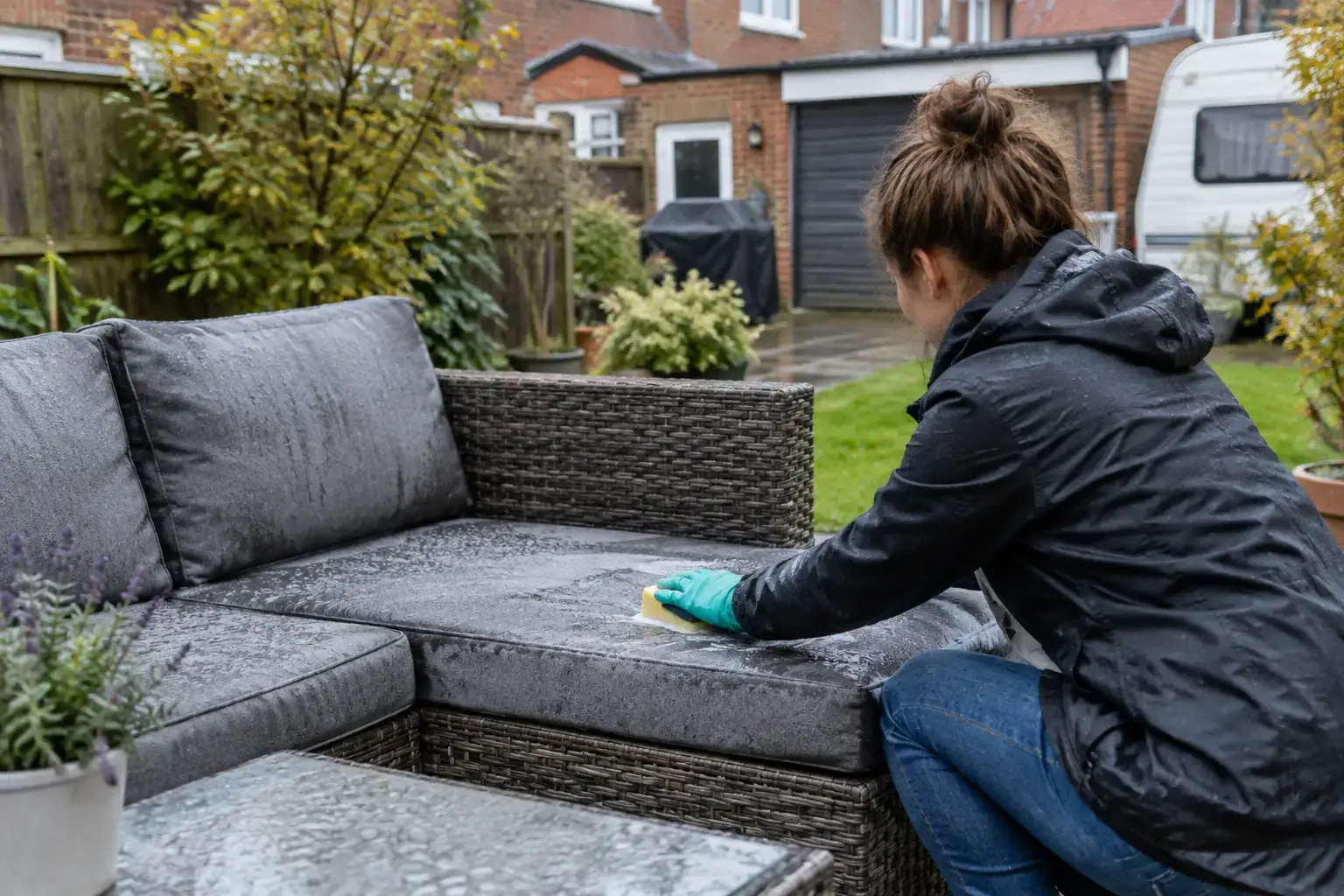
A patio set can go from inviting to grubby surprisingly quickly. Pollen settles on it, rain leaves marks, birds make a mess, and a damp British winter can encourage algae and mildew. Knowing how to clean outdoor furniture properly means you can freshen it up without damaging the finish, wasting products or spending your whole weekend scrubbing.
The best method depends on what your furniture is made from. Plastic, metal, wood, rattan and fabric cushions all need slightly different care, but the starting point is usually the same: remove loose dirt first, use a mild cleaner, rinse carefully and allow everything to dry properly before putting it back in place.
Choose a dry day if possible, ideally with enough breeze or sunshine to help cushions and furniture dry afterwards. Move the set onto a patio, driveway or lawn where dirty water can drain away, rather than cleaning directly on decking or near indoor flooring.
For most jobs, you only need a bucket of warm water, washing-up liquid, a soft sponge or microfibre cloth, a soft-bristled brush and a hose or clean water for rinsing. Keep an old toothbrush handy for grooves, joints and awkward corners. A diluted white vinegar solution can help with light mildew on suitable surfaces, but always test it somewhere hidden first.
Avoid harsh scourers, neat bleach and very powerful pressure washing unless the furniture manufacturer says it is safe. They may seem like a quick fix, but they can scratch plastic, strip paint, damage timber fibres and force water into rattan or cushion fillings.
Plastic chairs and tables are practical, lightweight and easy to maintain, but white and pale-coloured pieces can show grime quickly. Start by brushing off leaves, dust and cobwebs. Then wash the surface with warm, soapy water and a soft sponge.
For ingrained dirt in the textured areas, use a soft brush and work in small circles. Rinse well, as leftover soap can leave dull streaks once the furniture dries. If there are stubborn marks, try a paste made from bicarbonate of soda and water, applied gently with a damp cloth. Do not scrub aggressively, as this can create fine scratches that trap more dirt later.
If plastic furniture has become brittle, faded or cracked from years outdoors, cleaning will improve its appearance but cannot restore its strength. Check chair legs and armrests before guests sit down, especially at the start of the season.
Metal garden furniture is generally straightforward to clean, although rust needs prompt attention. Use warm soapy water and a soft cloth for routine cleaning, paying attention to the underside of tables, chair legs and joins where water can collect.
Dry the furniture with a clean towel rather than leaving it to air-dry. This helps prevent water spots and reduces the chance of rust developing on exposed areas. For small rust patches, lightly rub the affected spot with fine-grade sandpaper or a wire brush, wipe away the dust and touch up the finish with an appropriate outdoor metal paint.
Cast iron furniture is heavier and often more decorative, with plenty of detailed areas for dirt to settle. A soft brush is useful here. Aluminium is less likely to rust, but it can still oxidise or look chalky over time, so stick to gentle cleaning and avoid abrasive pads.
Wood needs a lighter touch than plastic or metal. Teak, eucalyptus, acacia and other hardwoods can withstand outdoor conditions well, but too much water pressure or harsh cleaning can roughen the surface and shorten the life of the furniture.
Brush away debris, then wash using a soft brush and a mild solution of warm water and washing-up liquid. Work along the grain rather than across it. Rinse sparingly with clean water and let the wood dry fully, preferably for at least a day, before applying any treatment.
Greying is natural on many hardwoods and does not necessarily mean the furniture is damaged. If you prefer the original warmer colour, use a wood cleaner or restorer made for the specific timber. Once dry, a suitable outdoor oil or protective treatment can help reduce moisture absorption. The right product depends on the wood and its existing finish, so avoid applying oil over painted or varnished surfaces unless it is designed for that purpose.
Softwood furniture, such as pine, is more vulnerable to damp and peeling finishes. Check it regularly for flaking paint, splits and soft patches. A little maintenance now is easier than replacing a chair after one wet winter.
Natural rattan should not be soaked. Use a vacuum with a brush attachment or a soft hand brush to remove dust from the weave, then wipe it with a barely damp cloth. Let it dry in a sheltered spot, not in strong direct heat that could make the material brittle.
Synthetic rattan is tougher and more common in British gardens. Clean it with warm, soapy water, using a soft brush to lift dirt from between the weave. Rinse lightly rather than drenching it, particularly around the frame and feet. Check for loose strands or exposed metal while you clean, as small repairs are easier before the damage spreads.
Always check the care label before cleaning cushions. Some covers can go in the washing machine on a gentle cycle, while others should only be hand-washed. Remove loose debris first, then spot-clean marks with mild soapy water and a soft cloth.
For mildew, use a cleaner approved for outdoor fabric and follow the instructions carefully. Do not put damp cushions straight back on the furniture or into a storage box. They need to dry right through, including the filling, otherwise the musty smell and mould may return.
A useful habit is to stand cushions upright after rain so water can run off and air can circulate. If a shower is expected, bringing them indoors or storing them in a dry cushion bag takes only a minute and saves a bigger cleaning job later.
Green algae is common on shaded patios and furniture that stays damp. Deal with it as soon as you spot it, because it can become slippery and more difficult to remove. A mild cleaning solution and soft brush are often enough for routine algae. For heavier growth, choose a surface-appropriate outdoor cleaner and use it exactly as directed.
Mould and mildew need a little more care. Wear gloves, clean the affected furniture outdoors and avoid brushing dry mould, which can spread spores. Wash removable fabrics separately where possible, and ensure every part is completely dry before reassembling the set.
Bird mess is best removed promptly. Soften it first with warm water rather than scraping at it while dry, especially on painted metal, plastic and wood. A plastic scraper or an old card can help lift residue without gouging the surface.
A deep clean once or twice a year is useful, but small regular jobs make the biggest difference. Wipe table tops after meals, shake out cushions, clear leaves from chair frames and check that furniture is not sitting in puddles. These quick tasks stop damp and dirt becoming a bigger problem.
When autumn arrives, store cushions indoors or in a dry, ventilated container. Furniture covers are handy, but only if they fit well and allow air to circulate. A cover that traps moisture against the furniture can do more harm than leaving a weather-resistant set uncovered.
If you are short on storage space, stack chairs carefully, raise furniture slightly off wet ground where possible and leave a gap between pieces for airflow. It is a simple way to help your garden set last through the colder months.
A clean table and a dry chair make the garden far more likely to get used, whether it is a quick cuppa outside or a full family barbecue. Keep a few basic cleaning essentials nearby, deal with spills early, and your outdoor space will stay ready whenever the weather decides to cooperate.
