Address
86 Amesbury Road
Manchester M9 6JF United Kingdom
Learn how to store extension leads safely, avoid knots and damage, and keep your garage, shed or cupboard tidy for every job all year round.
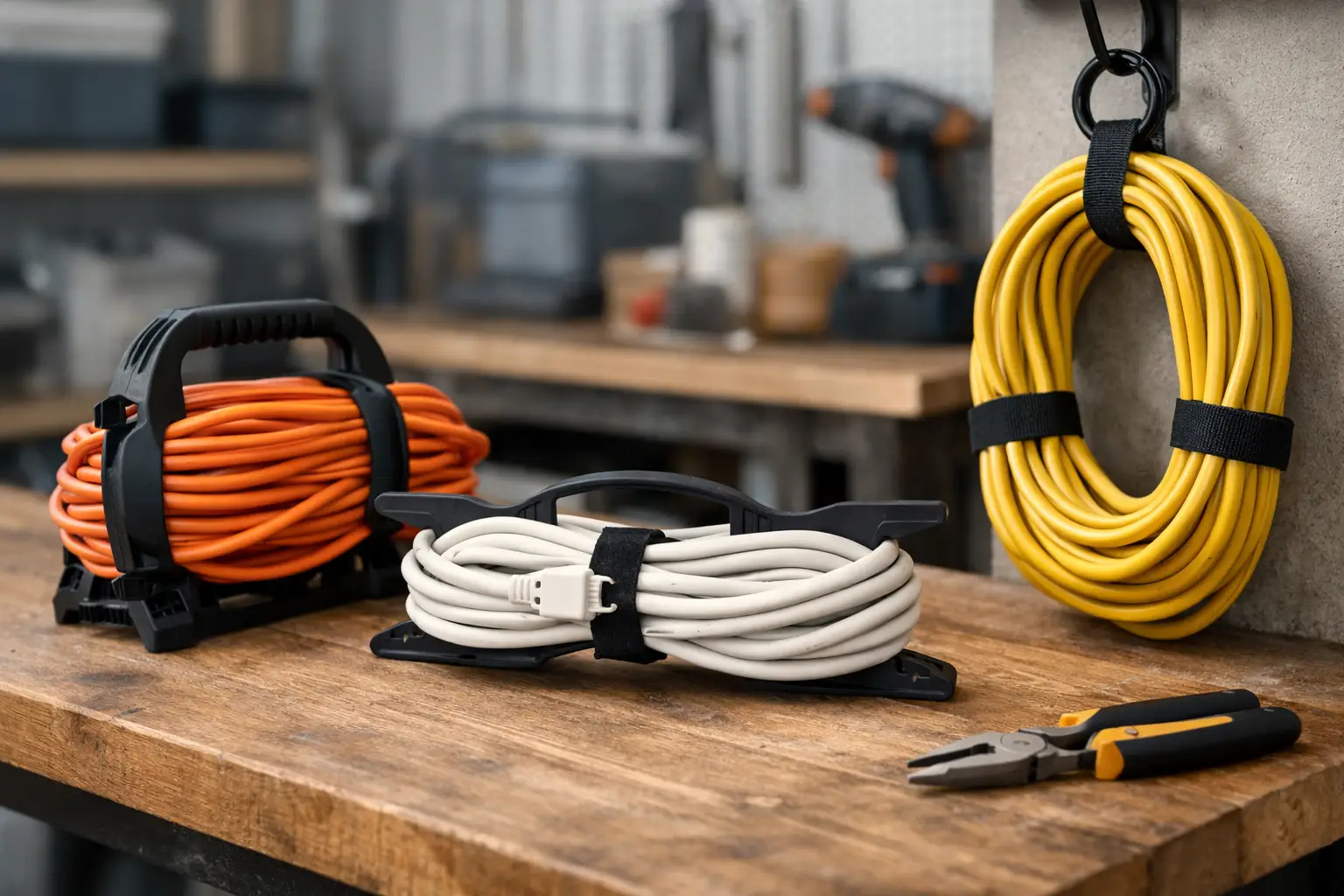
A tangled extension lead always seems to appear when the weather turns, the hedge needs trimming or you are halfway through a DIY job. Knowing how to store extension leads properly saves time, helps prevent damaged cable and makes a small but useful difference to how tidy your garage, shed or utility cupboard feels.
The good news is that it does not take fancy equipment. A clean, dry storage spot and a sensible winding method will keep most extension leads ready for the next job.
Before putting an extension lead away, unplug it fully and let it cool down if it has been powering tools, heaters or garden equipment. Never wind up a lead while it is still connected to the mains, even if the appliance at the other end is switched off.
Run the cable through your hands as you wind it. Look for splits in the outer casing, crushed sections, exposed wires, scorch marks or a plug that feels loose. A lead with visible damage should not go back into storage for another day. Stop using it and replace it, or have it checked by a qualified person where appropriate.
If the lead has been used outside, wipe away mud, grass and moisture first. This is especially worthwhile after washing the car, pressure washing the patio or using electric garden tools. Putting a damp lead into a sealed box or cold shed can encourage corrosion around the plug and socket.
The way a cable is wound matters more than most people think. Wrapping it repeatedly around your hand and elbow is quick, but it can leave stubborn twists in the cable. Those twists make a lead harder to lay flat and can put unnecessary strain on it over time.
For a standard loose extension lead, use a loose figure-of-eight. Hold one end of the lead in one hand, create a loop in one direction, then make the next loop in the opposite direction. Keep alternating until you reach the end. This balances the natural twist in the cable and leaves you with a neat bundle that uncoils easily.
Secure the finished bundle with a reusable cable tie, hook-and-loop strap or a short length of soft cord. Avoid pulling it tight enough to pinch the cable. Keep the plug and socket end visible rather than burying them in the middle, so you can check them quickly next time.
A simple round coil is also fine for short, light-duty leads used for lamps, chargers or indoor jobs. Make wide loops instead of tight ones. Tight bends can stress the cable, particularly in colder weather when plastic coatings are less flexible.
If your extension lead is built into a cable reel, wind it back using the handle rather than forcing the cable around the reel by hand. Guide the lead as it goes to prevent it piling up on one side, jamming or rubbing against the reel casing.
Check that the cable is dry before winding it in. Then store the reel upright or hang it from its handle where it cannot fall. Do not leave a heavy reel balanced on a high shelf, especially in a busy shed or garage.
One key point for future use: if a cable reel will power a high-wattage appliance or tool, it usually needs to be fully unwound first. Coiled cable can build up heat under load. Always follow the rating and instructions shown on your particular reel.
Extension leads do best somewhere dry, clean and out of direct sunlight. A utility cupboard, garage cabinet, lidded storage box or shelf in a dry shed can all work well. The right choice depends on how often you use the lead and what it is used for.
For an indoor lead that comes out regularly, a labelled storage basket or box near your DIY supplies is handy. It avoids the familiar hunt through drawers when you need to vacuum behind furniture, put up decorations or use a fan during a warm spell.
Garden and garage leads need a little more protection. A lidded plastic storage box keeps dust, cobwebs and accidental splashes away, while a wall hook or reel holder keeps them off a potentially damp floor. If your shed is prone to condensation, a box stored on a shelf is better than one placed directly on concrete.
Avoid storing leads near radiators, boilers, paint thinners, fuel, garden chemicals or anywhere mice may nest. Heat, fumes and pests can all damage cable insulation. In a caravan, keep leads in a dry locker away from gas equipment and loose heavy items that could crush the cable while travelling.
Hanging a lead is convenient, but the hanging point matters. A broad, smooth hook is kinder to the cable than a narrow nail, sharp screw or rough bit of metal. Thin hooks can create a tight bend in the same place every time, weakening the outer coating.
A purpose-made cable hook, large utility hook or reel holder is a practical choice for garages and sheds. Hang the coiled lead loosely and low enough that it will not be pulled down when someone reaches for a rake, bicycle or toolbox.
For several leads, give each one its own hook or labelled container. Trying to hang multiple cables together is how plugs become tangled, leads get dragged across the floor and the wrong one gets taken outside.
It is tempting to put every spare cable in one big box, but sorting them by job makes life easier. Keep short indoor extension leads apart from heavier garden leads, cable reels and caravan hook-up cables. You will find what you need faster and reduce the chance of using a light indoor lead where a tougher outdoor-rated option is needed.
A simple label can say “indoor”, “garden”, “caravan” or “Christmas lights”. For longer leads, note the length as well. It is frustrating to uncoil 25 metres of cable for a job two metres from the socket, and a short lead can encourage unsafe stretching when it does not quite reach.
If you use an outdoor lead, make sure it is suitable for outdoor use and has the right protection for the conditions. Storage will not turn an indoor extension lead into a safe garden lead. Likewise, avoid joining several extension leads together as a permanent solution. If you regularly need more reach, a single lead of the correct length is the tidier and safer answer.
The easiest storage system is one you will actually use. Once a job is done, unplug the lead, wipe it if needed, inspect it briefly, wind it without twisting and put it straight back in its usual place. That takes a minute or two, rather than leaving a trip hazard across the garage floor until the weekend.
It is also worth checking stored leads at the start of busy seasons. Look over garden leads before spring jobs begin, inspect outdoor reels before autumn clear-ups, and test decorative-light leads before December. Replace damaged cable rather than relying on tape as a long-term fix.
A neatly stored extension lead may not be the most exciting bit of household organisation, but it is one of those small jobs that pays you back every time. Give each lead a dry home, wind it with care and the next practical task becomes that little bit more easy peasy.
