Address
86 Amesbury Road
Manchester M9 6JF United Kingdom
Use this garage organisation example to turn clutter into useful zones for tools, bikes, garden gear and everyday essentials at home with less daily hassle.
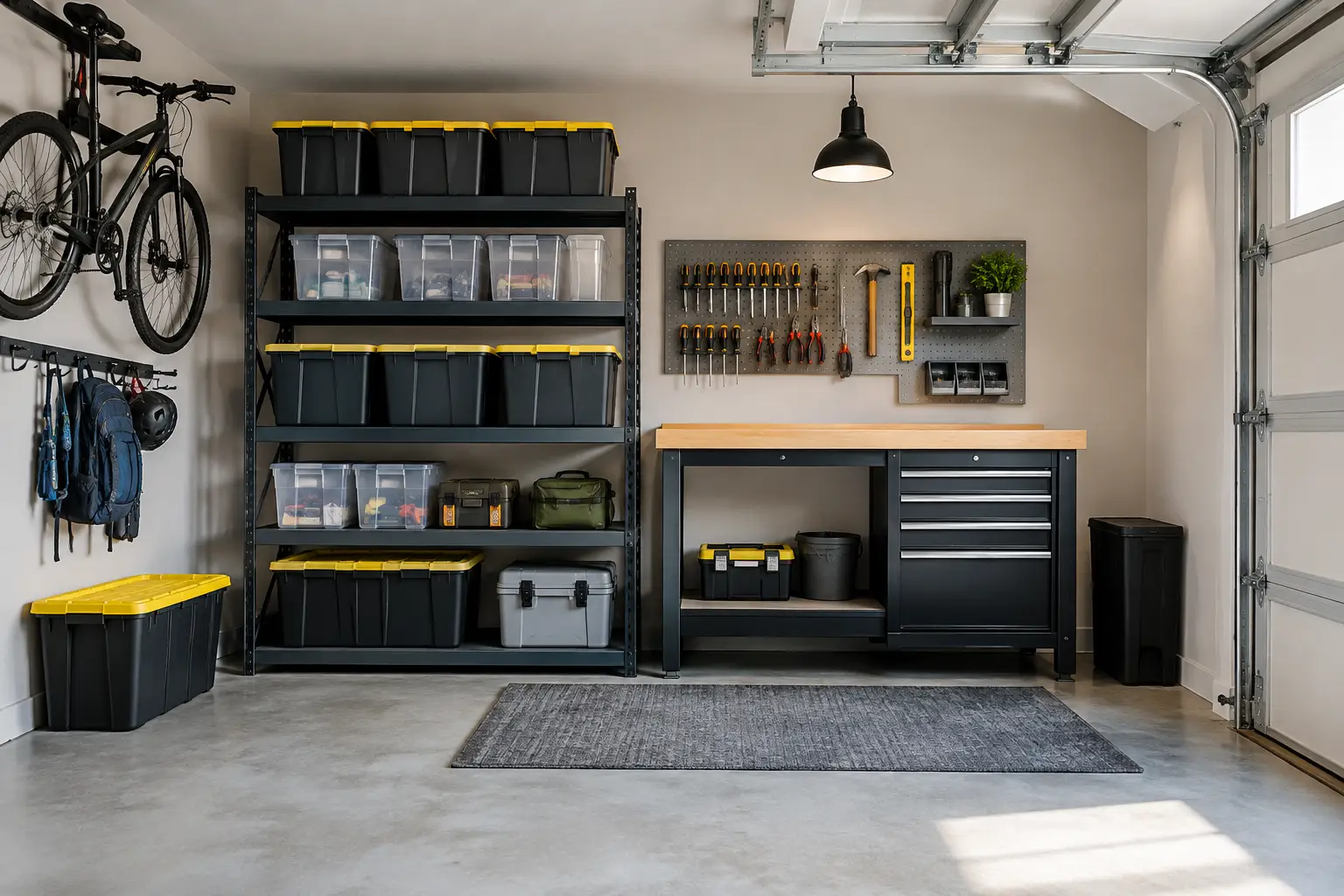
The garage door opens, and there it is: the half-used paint tins, footballs, muddy boots, tools, garden chairs and the box you have not looked inside since the last house move. A good garage organisation example is not about making the space look like a showroom. It is about being able to find the hedge trimmer, park the car and put things away without creating another pile.
For most UK homes, the garage has to work hard. It may be part workshop, part garden store, part bike shed and part holding area for bulky household essentials. The easiest way to organise it is to give every part of the room a clear job, then choose storage that suits what you actually use.
Before buying shelves, hooks or storage boxes, take everything out that is safely movable. Sweep the floor and look at the empty space properly. This is the point where many garages become easier to manage, because you can see how much room is being lost to items that are broken, out of date or simply no longer needed.
Sort as you go, but keep the decision simple. Keep items you use, repair items that are worth repairing, donate usable things and responsibly dispose of the rest. Old paint, oils, batteries, chemicals and electrical items should not go in the household bin, so check your local council guidance for safe disposal.
Do not aim to keep every spare item just in case. A garage feels cluttered when it stores decisions rather than useful belongings. If you have not used something for several years and it has no clear purpose, freeing up that space can be more valuable than keeping it.
Picture a single garage with one car space, a back wall, two side walls and limited floor room. The most practical layout keeps heavy, messy and regularly used items low down or near the door, while less-used seasonal items move higher up.
Along the back wall, fit sturdy shelving for labelled boxes, paint supplies, car-care products and DIY materials. Put heavier boxes on the lower shelves and lighter ones at shoulder height or above. Clear boxes make it quick to spot contents, but solid lidded boxes are often better for keeping dust, damp and spiders away from fabrics, decorations and paperwork. Either option works if the labels are clear.
Use one side wall for long-handled garden tools. Rakes, spades, brooms and hoes take up surprisingly little room when stored vertically on a wall-mounted rail or individual hooks. Keep a shallow tray beneath them for muddy footwear or loose compost bags. This makes cleaning up after gardening far less of a chore.
The other side wall can become the active-use zone. Hang bicycles, scooters, helmets and camping chairs where they can be reached without moving several boxes first. If bikes are used every week, a low wall hook or floor stand is usually easier than a ceiling hoist. Ceiling storage saves space, but it is best for items you only need a few times a year, such as Christmas decorations, suitcases or holiday gear.
Near the garage door, place the things that leave the house most often: reusable shopping bags, a folding trolley, umbrella stand, car screenwash and a small cleaning caddy. This is also a sensible spot for a boot tray, especially during wet weather. The key is to keep the route from door to car clear. A garage should not require an obstacle course before the school run.
Zones stop a garage from becoming one large, mixed-up cupboard. You do not need fancy signs or a complicated system. A few logical areas will do the job.
A DIY zone keeps tools, screws, tape measures, adhesives and fixings together. A garden zone holds plant pots, gloves, lawn-care products and tools. A vehicle zone is useful for screenwash, microfibre cloths, tyre accessories and emergency supplies. Then there may be a family zone for bikes, sports equipment and outdoor toys, plus a seasonal zone for items that spend most of the year packed away.
Keep each zone close to where it makes sense. Garden equipment belongs near the door to the garden, while car-care supplies work best near the vehicle. This sounds obvious, but it prevents the familiar pattern of carrying dirty tools across the garage and dropping them wherever there happens to be space.
Give every zone a boundary. It might be one shelving unit, two shelves, a row of hooks or a single large box. Once that area is full, do not expand it into the next zone. Instead, decide what can be used, moved or removed.
The right storage depends on the weight, size and frequency of use of each item. For everyday tools, an open pegboard or wall rack is quicker than a deep toolbox. You can see what is missing and return each item to its place after a job. For loose screws, nails and fittings, small stackable organisers prevent the frustrating hunt through old jars and mixed tubs.
Freestanding shelving is one of the most useful choices for a garage, but check the weight rating before loading it with tins, power tools or bags of compost. Metal shelving tends to suit heavy-duty storage, while plastic units can be handy for lighter cleaning supplies and household items. Secure tall shelving to the wall where possible, particularly in a busy family garage.
Lidded storage boxes are ideal for seasonal belongings. Choose one box size where you can, as matching boxes stack more safely and make the shelves easier to use. Label more than one side, not just the lid. You should be able to identify the contents without pulling every box down.
For awkward equipment, hooks are often the best value solution. A properly fitted hook can hold folded chairs, ladders, hoses, bikes, extension leads and garden tools off the floor. Always check the wall type, fixings and weight limit first. Plasterboard alone may not be suitable for a heavy bike or ladder.
Avoid filling every inch of shelving. A little empty space gives you somewhere to set down a box while looking for something, and it makes tidying possible after a busy weekend. Storage is meant to make your life easier, not create a game of garage Jenga.
The best organising system is the one everyone in the household can follow. Put frequently used items at an easy height and make labels large enough to read at a glance. If children use sports gear or scooters, give them a low hook, basket or clearly marked box they can reach themselves.
Build a five-minute reset into your routine. After mowing the lawn, washing the car or doing a DIY job, return tools and supplies before heading indoors. It is much easier to put away six items straight away than tackle a full garage clear-out every few months.
A quick seasonal check also helps. At the start of spring, bring garden items forward and move winter equipment higher up. Before colder weather arrives, make room for de-icer, a scraper, wet-weather footwear and indoor storage for anything damaged by frost. This small change keeps the garage working with the year rather than against it.
In a compact garage, protect floor space first. Vertical storage, narrow shelving and wall hooks matter more than large cabinets. Measure the space needed for your car with the doors open before fixing anything in place, especially if you need room for a pushchair, bikes or mobility equipment.
You may need to choose between full car parking and full workshop storage, and that is perfectly normal. If the car comes first, keep only the most useful garage items inside and move rarely used belongings to a shed, loft or another suitable storage area. If the garage is mainly a workshop, create one clear parking bay for bikes and keep work surfaces foldable where possible.
A practical garage does not need expensive fittings or a weekend of perfection. Start with one wall, one shelf or one troublesome pile. With a few useful storage basics and clear homes for everyday items, EasyPeasyMate-style organisation means less searching, less shifting and more room to get on with the day.
