Address
86 Amesbury Road
Manchester M9 6JF United Kingdom
Our guide to caravan awning care covers cleaning, drying, storage and repairs, so your awning stays weather-ready for every UK break and campsite pitch.
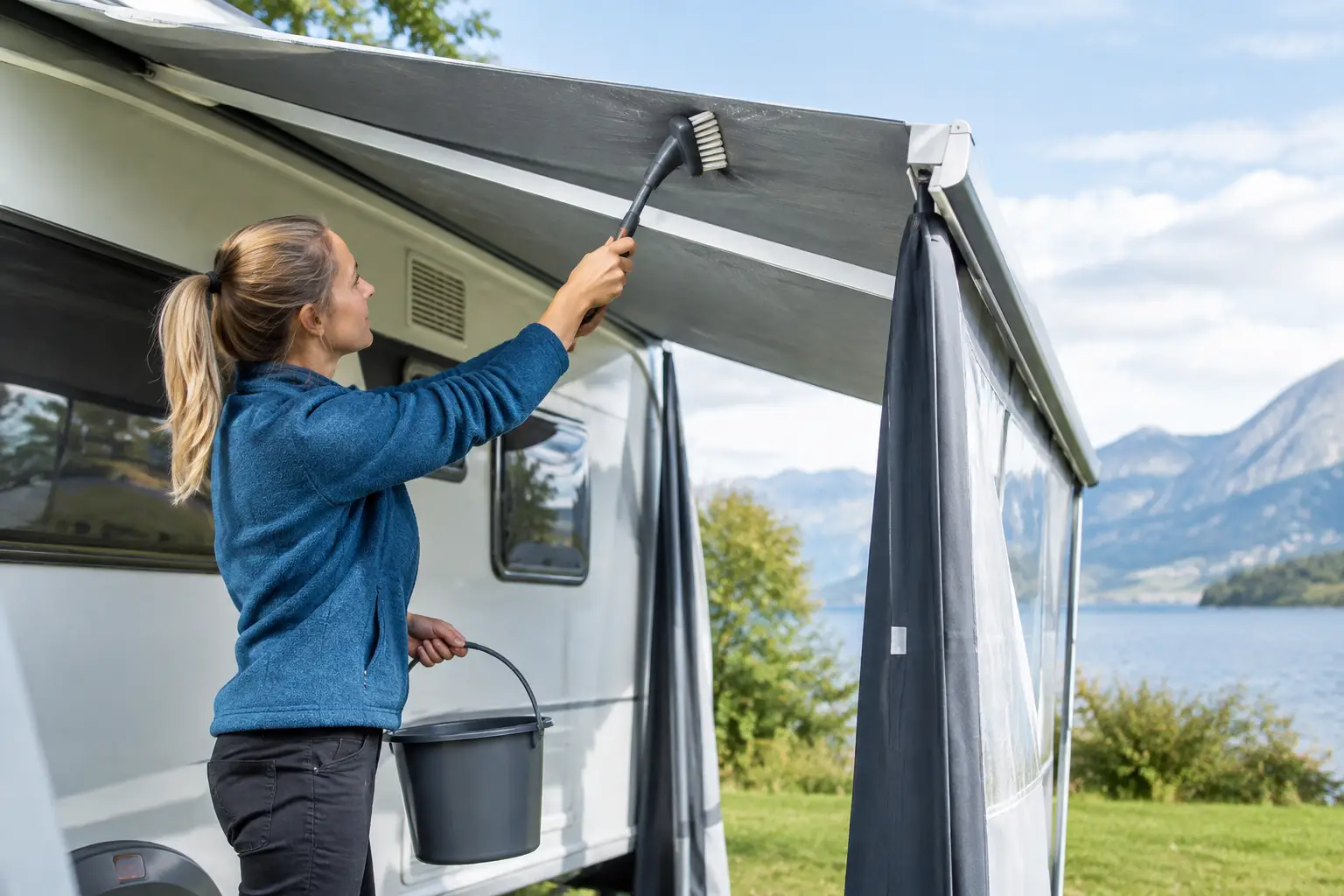
A caravan awning can turn a compact pitch into a proper living space, somewhere to leave muddy boots, eat breakfast or escape a passing shower. But it also gets the full British-weather treatment. This guide to caravan awning care keeps the job simple, helping you prevent mildew, stubborn dirt, damaged zips and a rather unpleasant surprise when you unpack for your next holiday.
Before reaching for any cleaner, check the label, handbook or care information supplied with your awning. Materials vary. Traditional canvas, acrylic fabric, polyester and lightweight seasonal awnings all react differently to water, cleaning products and waterproof treatments.
This matters most if you are tempted to use a strong household cleaner. Products designed for patios, bathrooms or washing-up can strip protective coatings, affect the fabric’s colour or leave residue that attracts more grime. A purpose-made awning cleaner is usually the safer choice, but even then, test it on a small, hidden area first.
The same goes for waterproofing sprays and seam sealers. Some awning fabrics are designed to breathe or have a factory-applied finish that does not need frequent topping up. Adding the wrong treatment can do more harm than good. If rainwater has started soaking through rather than beading on the surface, that is a useful sign to investigate – but it is not always a reason to treat the whole awning immediately.
A few minutes at the beginning and end of a break can save an afternoon of cleaning later. When putting the awning up, look over the fabric for bird droppings, tree sap, marks around the lower panels and dirt caught in the seams. Check that poles, brackets and pegs are straight and in good condition too.
Keep the awning clear of leaves, twigs and pooled water while it is up. Wet debris left against the roof or skirt holds moisture in place and can stain fabric. After heavy rain, check that the roof is tensioned correctly so water can run off rather than gather in a dip. Do not over-tighten it, though. Excessive tension can put strain on seams, zips and attachment points, especially when the temperature changes.
Ventilation makes a bigger difference than many caravanners expect. Open vents and doors when conditions allow, particularly when cooking, drying coats or bringing wet gear inside. Condensation can look like a leak, and leaving the awning shut up for long periods gives damp air nowhere to go.
Routine cleaning is generally a gentle job. Brush off dry dirt with a soft brush before it becomes wet and embedded. For local marks, use lukewarm water, a soft cloth or sponge and a cleaner that is suitable for your specific fabric. Work patiently rather than scrubbing hard.
Avoid pressure washers. They may feel like a quick fix, but the force can damage coatings, weaken stitching and drive water into places it should not reach. Bleach, harsh degreasers and abrasive pads are best avoided for the same reason.
Bird droppings and tree sap should be dealt with as soon as practical. Soften the mark with clean water first, then lift it away gently. Rubbing a dry, gritty mark across the fabric can create wear or leave a pale patch. For more widespread grime, follow the cleaner instructions carefully and rinse thoroughly if required.
Mildew needs a little more patience. First, make sure you are dealing with mildew rather than ordinary dirt or staining. Mild surface mildew can sometimes be treated with a fabric-safe specialist cleaner, but old black spotting may leave a mark even after the spores are removed. The priority is stopping it from spreading: clean the awning, dry it completely and improve airflow on future trips.
Clean windows with a soft microfibre cloth and a product approved for clear PVC. Never use rough brushes or powdery cleaners on window panels, as tiny scratches can quickly make them look cloudy. Folding windows with a soft protective layer between them also helps prevent scuffs during storage.
Fabric gets the attention, but the fittings do much of the hard work. Wipe poles and frames dry before packing them away, particularly after a wet weekend. Check for grit in the joints and look for bent sections, cracks or worn elastic.
Keep zips free from soil and sand with a soft brush. If a zip starts sticking, do not force it. Clean it first, then use a suitable zip lubricant sparingly. Forcing a zipper can tear the surrounding fabric and turn a small maintenance task into an expensive repair.
Packing up in the rain happens. It is not ideal, but it is often unavoidable when checkout time arrives and the weather refuses to cooperate. The key is what happens next.
As soon as you are home, unpack the awning and dry it fully. If you have room, erect it in the garden on a dry day. Otherwise, hang sections loosely in a clean, airy garage, shed or covered space, making sure air can circulate around both sides. Do not leave it folded in its bag for days while you wait for better weather.
It must be dry to the touch throughout, including hems, seams, mud skirts and window folds. These thicker areas hold moisture longest. A quick surface check is not enough, and putting away a slightly damp awning is one of the quickest ways to create mildew, stale smells and stuck-together window panels.
Avoid drying fabric directly against a radiator or using intense heat. Gentle airflow and time are kinder to coatings, adhesives and clear plastic windows. If drying indoors, protect floors and keep the fabric away from sharp edges, pets and anything that could snag it.
Once dry and clean, fold the awning loosely along its original folds where possible. Avoid sharply creasing windows, and place a clean cotton sheet, soft cloth or purpose-made protective layer between PVC panels. Roll or fold poles separately and make sure no sharp ends can rub against the fabric in the storage bag.
Choose a cool, dry place away from direct sunlight, damp walls and pests. A garage can work well if it stays dry, while a garden shed may be less suitable if it suffers from condensation. Never store an awning directly on a concrete floor where it can pick up damp. A shelf, pallet or raised storage box gives it a better chance of staying fresh.
It is worth labelling bags if you have several awning parts. Marking frame sections, curtains, pegs and draught skirts makes the next setup faster and reduces the chance of a hurried search on site. EasyPeasyMate shoppers know that a small bit of organisation now makes a weekend away much easier later.
Inspect seams, eyelets, roof straps, guying points and the caravan attachment edge whenever you clean the awning. A loose stitch or tiny tear is far easier to handle before wind places extra strain on it.
For minor fabric damage, a repair patch designed for awning material can be a practical short-term fix, provided the area is clean and dry. Small leaks around seams may respond to the correct seam sealer. However, a torn structural panel, broken main zip, damaged rail edge or badly bent frame section is usually a job for a professional repairer or replacement part.
Be realistic about age as well as damage. A well-cared-for awning can offer many good seasons, but UV exposure, repeated packing and stormy weather eventually take their toll. If fabric feels brittle, waterproof coatings are failing across large areas or key components are no longer reliable, replacement may be safer and better value than repeated fixes.
After each trip, brush off loose dirt, wipe down visible marks and air the awning before storing it. At the start and end of the main touring season, give it a fuller inspection, clean the fabric where needed and check poles, pegs, straps, zips and seams. This approach is less of a chore than one major rescue clean after months in storage.
A clean, dry, properly packed awning will look better, last longer and make arrival on site far less stressful. The next time the forecast changes halfway through packing, you will be glad the essentials are already in order.
