Address
86 Amesbury Road
Manchester M9 6JF United Kingdom
Learn how to protect plants from frost with simple UK garden steps, from fleece and watering to moving pots and spotting damage after a cold night outside.
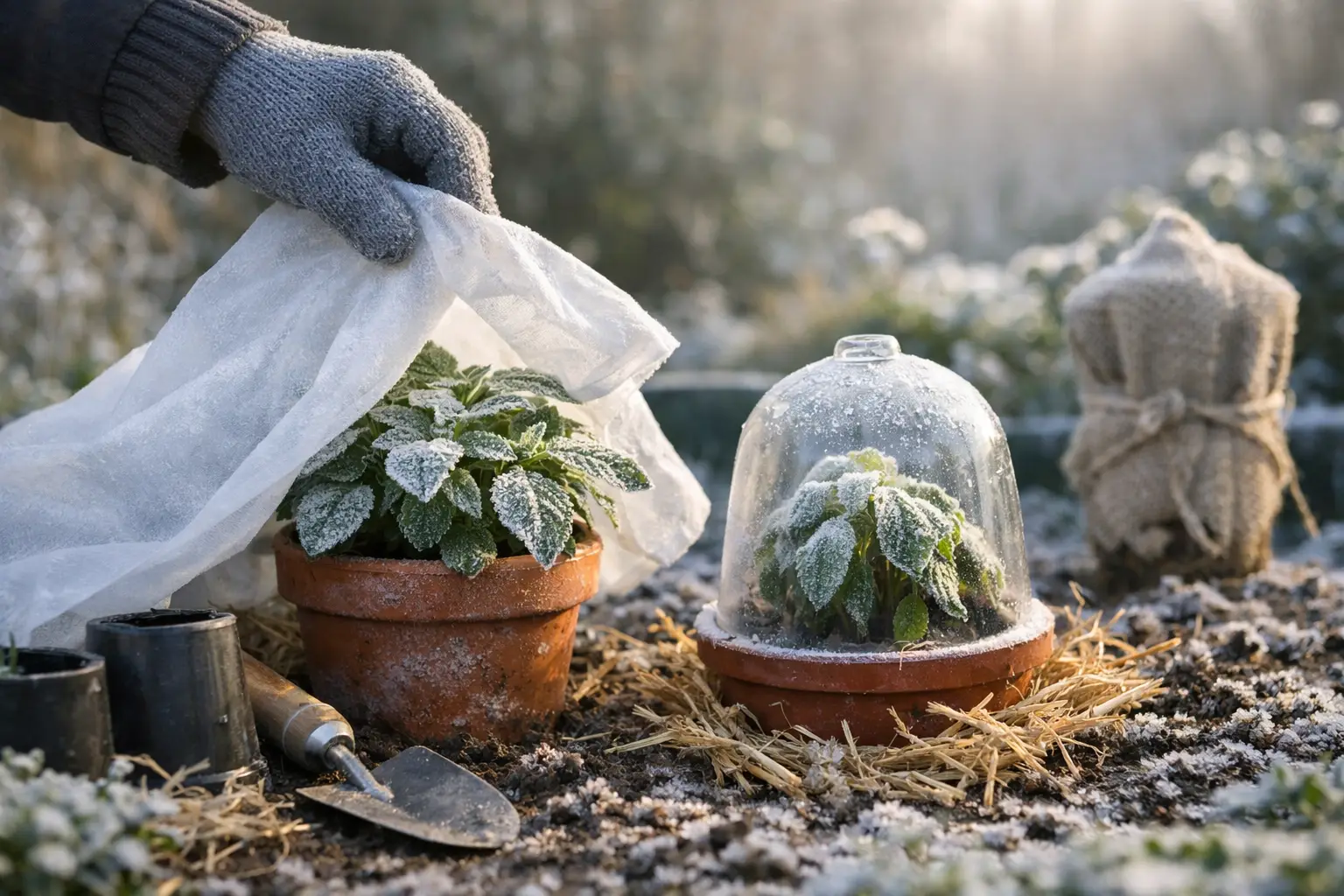
A clear, still evening can be tougher on the garden than a wet, windy one. When the temperature drops after sunset, tender leaves, fresh shoots and plants in pots can be damaged before breakfast. Knowing how to protect plants from frost means acting before the cold arrives, using a few simple materials and giving the most vulnerable plants first priority.
The good news is that you do not need a heated greenhouse or a complicated setup for every plant. A frost forecast is a prompt to make sensible choices: move what you can, cover what cannot move, and avoid creating damp, airless conditions beneath a cover. A little preparation can save you replacing plants in spring.
Not every plant needs wrapping up. Established native shrubs, hardy perennials, many bulbs planted in the ground and winter vegetables such as kale generally cope well with ordinary UK frosts. In fact, some plants benefit from a cold spell.
Put your effort into tender and newly planted specimens. Bedding plants, young dahlias, fuchsias, salvias, cannas, citrus trees, olives in exposed spots, tender herbs such as basil, and half-hardy vegetables are the usual candidates. Fresh spring growth is more vulnerable than older, woody stems too, so even a normally hardy plant may need help after it has started growing.
Container plants deserve special attention. Their roots have far less insulation than plants planted in the border, because cold air can reach the compost from every side. A pot that survives a light frost in a sheltered corner may struggle in an open, windy position.
A bright afternoon does not rule out frost overnight. Look for forecasts showing temperatures close to 0°C, particularly when the night is clear and calm. Ground frost can form even when the stated air temperature is slightly above freezing, especially in low-lying gardens and sheltered dips where cold air settles.
Be ready for local differences. A town garden with brick walls may stay warmer than an exposed rural plot, while a patio beside a house can be milder than a lawn a few metres away. If frost often catches your garden, make a note of which beds and corners are hit first. That knowledge is more useful than treating every area the same.
Garden fleece is one of the easiest and most useful options. It lets in light and air while trapping a layer of warmer air around the plant. Drape it loosely over plants in the late afternoon, before the temperature falls, and secure the edges with bricks, pegs or stones so cold air cannot blow underneath.
Do not pull fleece tight against leaves. The cover works best when it creates a small insulating gap. For taller plants, use canes or a simple frame to hold the material away from the foliage. Remove or lift the cover once temperatures rise in the morning, especially if the day is sunny. Plants can overheat or become too damp if left covered for days.
Horticultural cloches are handy for individual plants and young veg, while a cold frame provides useful protection for trays, seedlings and small pots. An upturned cardboard box can offer a one-night fix for a small plant, but it must stay dry and should come off promptly in the morning.
Avoid laying plastic sheeting directly on foliage. Plastic does not breathe well, and leaves touching it can still freeze or suffer condensation damage. If it is your only option, keep it raised on a frame and leave some ventilation rather than sealing the plant in completely.
Pots are the easiest plants to protect because they can be moved. Gather them against a house wall, ideally one that gets daytime sun and is sheltered from the wind. A porch, unheated conservatory, garage with a window, shed or cold frame can all be suitable for a short cold snap, depending on the plant and available light.
Do not place plants directly beside a radiator or in a very warm living room unless they are genuine houseplants. Sudden heat can cause stress and encourage soft, weak growth. A cool, frost-free space is usually the aim.
For pots that must stay outdoors, lift them off cold paving using pot feet, timber battens or bricks. Grouping pots close together reduces the exposed surface area. Wrap the pot itself with hessian, bubble wrap or an old blanket, keeping the drainage holes clear. The goal is to protect the roots, not to trap water around them.
Terracotta pots can crack when wet compost freezes and expands. If severe frost is expected, move delicate terracotta containers under cover where possible. Frost-proof pots are more reliable outdoors, but even these benefit from good drainage and a sheltered position.
A generous layer of mulch helps keep soil temperatures more even around established plants. Spread compost, leaf mould, bark or well-rotted manure over the root area, taking care not to pile it tightly against stems or crowns. Around 5cm is often enough for a useful insulating layer.
For tender perennials that die back, wait until the foliage has been blackened by frost, then cut it back if appropriate and cover the crown with dry mulch. Straw or bracken can work well over dormant crowns, but remove or loosen it in spring so new growth is not smothered.
Mulch is not a magic shield for tender top growth. It protects what is below ground, which can be the difference between a plant dying completely and returning once warmer weather arrives.
Dry compost freezes faster than slightly moist compost, so check pots and recently planted specimens before a cold night. Water the soil earlier in the day if it is dry, allowing excess moisture to drain before temperatures fall. Damp soil holds more warmth than dust-dry soil.
That does not mean soaking everything. Waterlogged roots are already under stress and can be damaged badly by freezing conditions. Keep drainage holes clear, empty pot saucers before a hard frost, and do not water foliage late in the evening. The practical rule is moist roots, not soggy ones.
The biggest mistake is covering plants too late. Once leaves are already frozen, a cover will not reverse the damage. Keep fleece, pegs and a few spare pots or boxes somewhere easy to reach, so a forecast does not turn into a late-night scramble.
It is also tempting to cut off every browned leaf immediately after a frost. Wait. Damaged foliage can provide a little protection to the living tissue beneath, and the full extent of the damage is not always obvious until the plant begins growing again. When conditions improve, prune back to healthy green tissue using clean secateurs.
Finally, do not assume one mild morning means winter has finished. In much of the UK, late frosts can arrive well into spring, often just as bedding plants and tender veg are being planted out. Keep protective materials nearby until the risk has properly passed in your area.
If leaves look limp, blackened or translucent at first light, resist the urge to fertilise or force new growth. Let the plant thaw naturally and assess it over the next few days. Water only if the compost is dry, and keep the plant sheltered from further cold nights.
Tender annuals that have collapsed completely are unlikely to recover. Perennials, shrubs and young fruit trees often look worse than they are. Check stems by gently scratching a tiny area of bark with a fingernail. Green tissue beneath suggests the stem is still alive; brown and dry tissue may need cutting back later.
A protected garden does not have to look like a building site. A roll of fleece, a few weights, a sheltered corner and a little advance notice cover most everyday situations. Keep the approach simple, protect the plants that truly need it, and your garden will have a much better chance of bouncing back when the next cold night clears.
