Address
86 Amesbury Road
Manchester M9 6JF United Kingdom
Choose the right leaf grabbers for quicker, cleaner garden clear-ups. Compare designs, use them safely and make autumn tidy-ups less tiring for everyone.
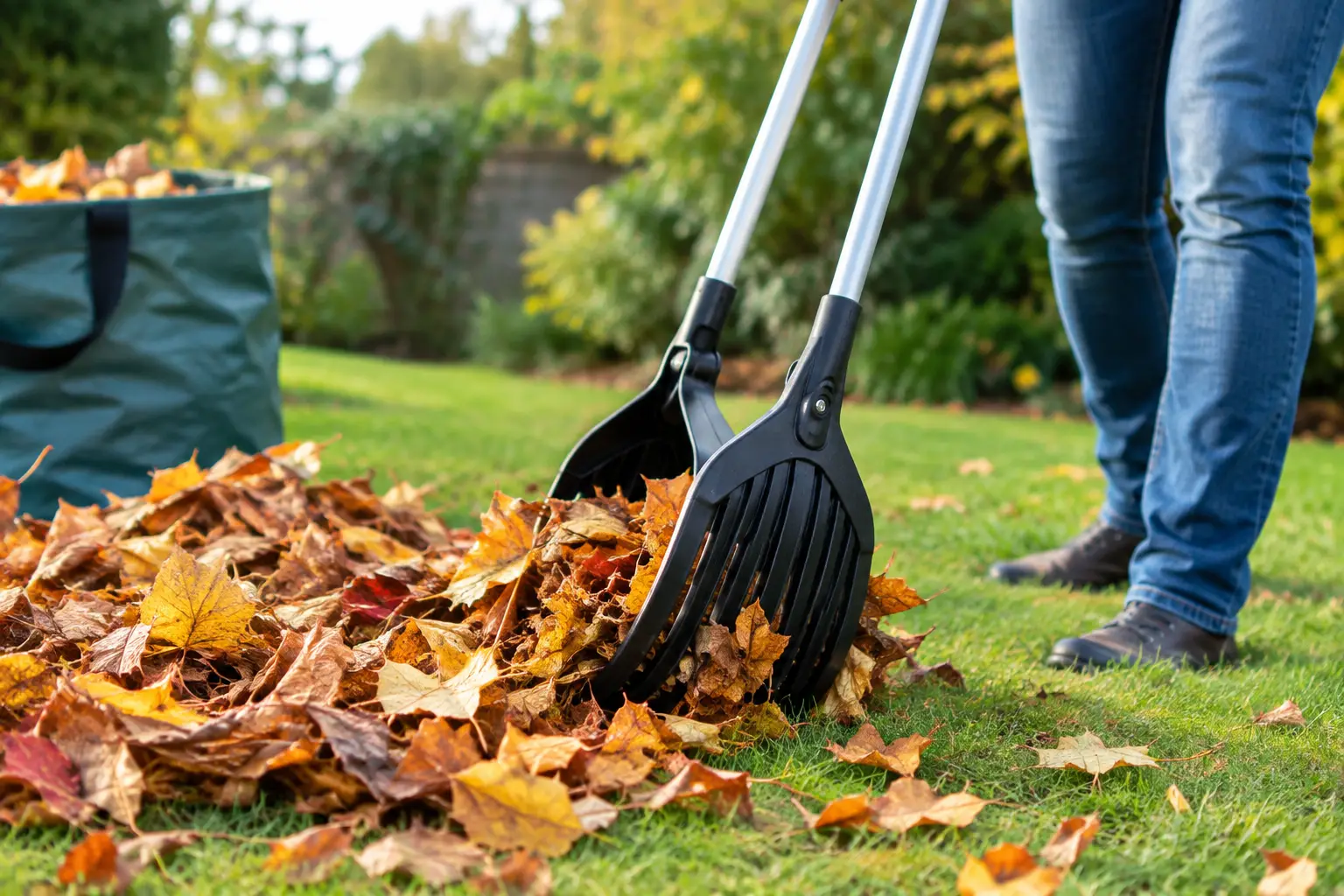
A lawn can look tidy one minute and be covered in soggy leaves after a windy night. Leaf grabbers make the clear-up far less of a chore by letting you gather big handfuls without constantly bending, touching wet debris or dropping leaves on the way to the bin.
They are simple tools, but the right pair can save a surprising amount of time through autumn and whenever hedges, borders or patio pots need a quick tidy. Here is what to look for, how to use them properly and when a different garden tool may be the better choice.
Leaf grabbers are a pair of large, hand-held scoops designed to work like oversized hands. You place one in each hand, sweep leaves, grass clippings or light garden debris into a pile, then lift and carry it to a garden-waste bag, compost heap or wheelbarrow.
Most are made from lightweight plastic with hand grips or straps on the back. Their wide curved shape lets you collect more at once than you could with gloved hands, while keeping your fingers away from damp leaves, prickly twigs and anything unpleasant hiding in the pile.
They are particularly handy after raking. Rather than repeatedly crouching down to gather loose leaves, you can scoop up a pile in one or two movements. For households keeping on top of a larger garden, that small difference soon adds up.
The main benefit is less bending. Clearing a driveway, lawn or patio often involves dozens of trips from ground level to bin level. A pair of grabbers cannot remove every bit of effort, but they reduce the repeated reaching and gripping that can leave hands and lower backs feeling sore.
They also keep the job moving. The broad scoops hold a decent volume, so you are not trying to balance a flimsy armful of leaves against your coat. This is useful when working close to a garden-waste sack, where loose leaves can easily blow back across the path before you have finished.
There is a cleanliness benefit too. Wet leaves can be muddy, slimy and full of tiny bits of soil. Leaf grabbers create a useful barrier between your hands and the mess. Gloves are still sensible for thorny or unknown garden waste, but the scoops reduce direct contact considerably.
For families, they can make a routine job more manageable. Older children can help gather dry leaves under supervision, turning a weekend clear-up into a quick shared task rather than one person’s long afternoon in the garden.
Not all designs feel the same in use. A bargain pair that is too small, too flimsy or uncomfortable to hold can make an easy job frustrating. Consider where you will use them most and how much material you normally collect.
Large, wide scoops are ideal for dry leaves spread across a lawn or patio. They gather more per lift and work well with a broad fan rake. However, very large grabbers can feel awkward in narrow side passages, small courtyards or between closely planted borders.
Look for a curved front edge that meets the ground cleanly. A slightly pointed or shaped edge can help you slide under a loose pile, while a deep scoop keeps leaves contained during the walk to the bin. Flat, shallow designs may be fine for light dry debris but can spill when loaded.
Plastic leaf grabbers are popular because they are light, affordable and do not rust. A sturdy plastic with some flex is generally more comfortable than a very rigid, brittle-feeling material. The tool should be easy to lift when empty but strong enough not to buckle under a full scoop of damp leaves.
Wet leaves are much heavier than they look. If your garden tends to hold moisture or you clear autumn debris after rain, choose a solid construction and avoid overfilling the scoops. Two smaller loads are better than straining your wrists or cracking the tool.
Good grips matter more than many people expect. Some leaf grabbers have moulded handles, while others use adjustable hand straps. Try to choose a design that sits securely in your hand without forcing you to clench tightly.
If you wear gardening gloves, leave enough room for them. A cramped handle can rub and become uncomfortable halfway through a clear-up. For anyone with reduced grip strength, lightweight grabbers with broad, easy-to-hold handles are usually the most practical option.
Start by raking leaves into manageable piles rather than one huge heap. A massive pile looks efficient, but it is harder to lift and more likely to scatter across the lawn as you carry it away. Several medium piles are usually quicker to clear.
Stand with your feet comfortably apart and bend at your knees rather than folding from your waist. Place the scoops either side of the pile, push forward gently so the leading edges slide underneath, then bring them together. Keep the load close to your body as you lift and turn with your feet instead of twisting your back.
For filling a garden-waste bag, place the bag in a stable holder or rest it against a wall or wheelbarrow. Drop the leaves in from close range, not from shoulder height. This stops debris blowing back out and prevents the bag from collapsing just as you need both hands free.
Leaf grabbers work best when used with the right supporting tools. A fan rake gathers dry leaves quickly across lawns, while a stiff brush is useful on paving and decking. For borders, use a small hand rake or gloved hands to avoid catching delicate plants with the edges of the scoops.
These tools shine on lawns, driveways, patios, decking and paths, especially when the debris is dry or only lightly damp. They are also useful for grass cuttings, hedge trimmings, fallen petals and light pruning waste. After a barbecue or outdoor get-together, they can even help gather paper napkins and dry, non-sharp litter from the garden before a final sweep.
They are less suitable for heavy soil, stones, soaked compost or thick branches. Overloading them with dense material can strain the handles and makes lifting uncomfortable. A shovel, spade, wheelbarrow or dedicated garden fork is a better match for those jobs.
Be careful around gravel. Scooping leaves from a gravel path can collect stones at the same time, making the load heavier and potentially scratching plastic scoops. Rake leaves gently into a pile first, or use a leaf blower on a low setting if the area allows it and the conditions are dry.
Do not assume every bag of leaves needs to go straight into green-waste collection. Healthy fallen leaves can become useful leaf mould, a dark, crumbly material that improves soil structure and helps retain moisture. Fill a breathable sack or a simple contained pile, keep it damp but not waterlogged, and let nature do the slow work.
Tougher leaves, such as those from evergreen shrubs, can take longer to break down. Mixing them with grass cuttings or shredding them first can help. If leaves show signs of disease, such as obvious black spots or mildew, follow local council guidance on disposal rather than adding them to your home compost.
Keep paths and drains clear as you work. A build-up of wet leaves becomes slippery quickly and can block gullies when rain arrives. Clearing little and often is usually easier than waiting until everything is matted down.
Leaf grabbers need very little maintenance. Shake off debris after use, rinse away mud if needed and allow them to dry before storing. This helps prevent grime building up around the handles and keeps them ready for the next sudden shower of leaves.
Store them somewhere dry, such as a shed, garage or covered storage box. Hanging them from a hook saves floor space and stops the scoops becoming a place for rainwater to collect. Before the busy autumn season, check for cracks around handles, straps and edges.
A pair of leaf grabbers will not replace every garden tool, but that is not their job. Keep them by the rake and garden-waste bags, and the next leaf-covered morning becomes one of those jobs you can simply get done and get on with.
