Address
86 Amesbury Road
Manchester M9 6JF United Kingdom
Learn how to stop weeds between paving with practical cleaning, joint-filling and prevention tips for patios, paths and driveways that stay tidier longer
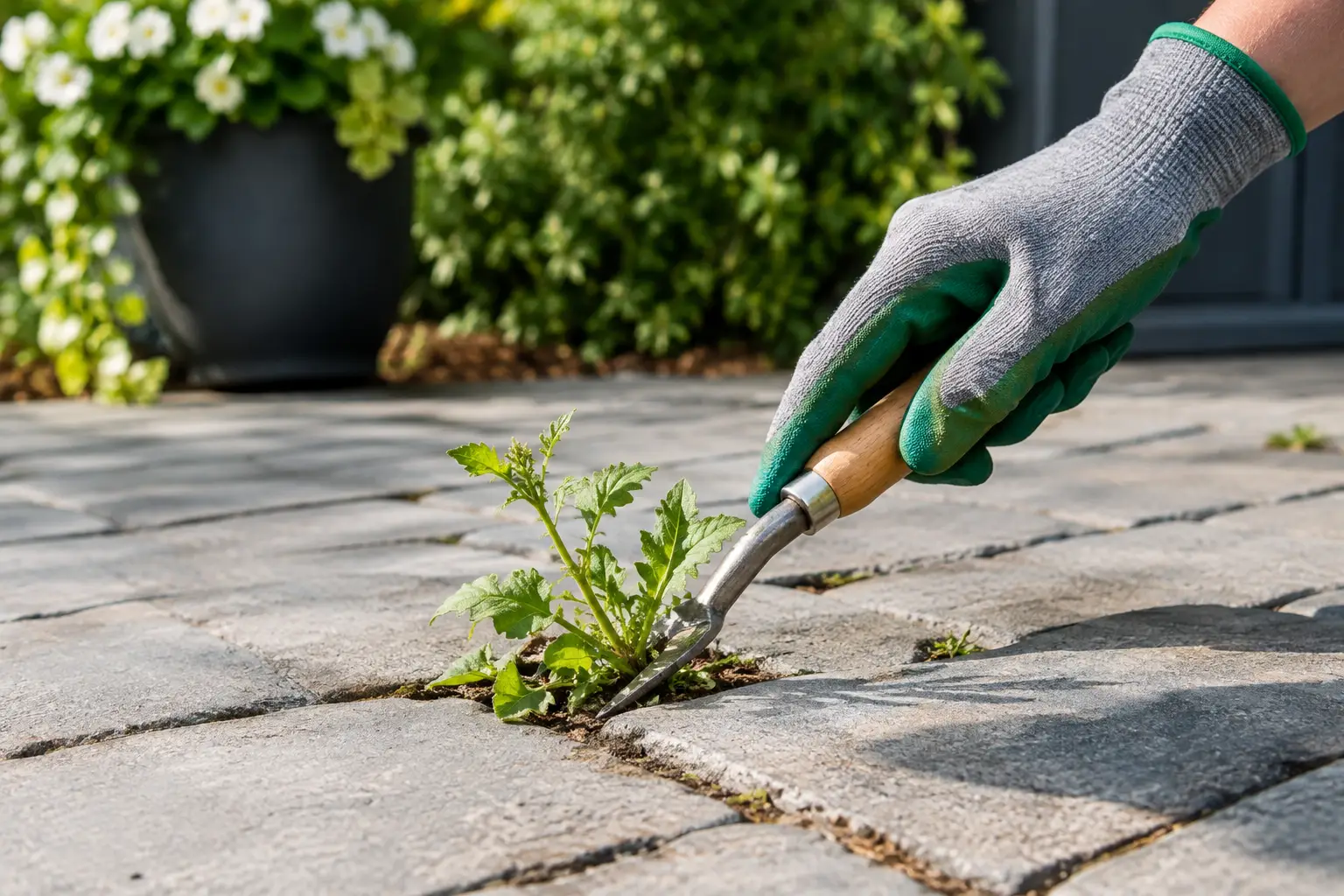
Most paving weeds do not push up from deep beneath your patio. They arrive as wind-blown seeds, settle into dusty joints and quickly take hold when there is enough moisture. That is good news: to stop weeds between paving, you do not always need to lift the whole area. A proper clean, sound jointing and a little regular attention can make a huge difference.
Whether it is a patio beside the back door, a garden path or a block-paved driveway, the best approach depends on the paving material, the size of the gaps and how quickly weeds return. The aim is not just to remove what you can see today, but to make the joints a much less welcoming place for the next batch of seeds.
Pulling weeds out by hand is the simplest place to begin, especially after rain when the ground is softer. Use a narrow weeding tool, old screwdriver or patio knife to get down into the joint and remove as much root as possible. A long-handled patio weeder is worth considering for larger areas as it saves your knees and back.
For small patches, this may be all you need. If weeds are scattered across a whole driveway or have thick tap roots, remove the top growth first and then deal with the roots. Leaving snapped roots in place can mean the weed returns, although annual weeds with shallow roots are usually easy to clear.
A stiff outdoor broom helps lift loose moss, soil, leaves and seed heads once you have weeded. This matters more than it sounds. Organic debris breaks down into a thin layer of compost between slabs, giving fresh seeds exactly what they need to germinate.
There is no single treatment that works best everywhere. Hot water can kill young weeds in pavement cracks, but take care around lawns, borders and plants you want to keep. It can also be awkward and unsafe on a large driveway, particularly on a slope.
A ready-to-use patio and path weedkiller can be a practical option for established growth, provided it is suitable for the surface and used exactly as the label directs. Choose a still, dry day, avoid spraying near ponds and drains, and keep children and pets away until the treated area is safe to use according to the product instructions. Never assume a stronger mix or extra application will work better.
Some people use household ingredients such as salt or vinegar. These can cause problems. Salt can damage nearby soil and plants for a long time, while homemade mixtures may not work reliably and can harm surrounding vegetation. For a tidy patio without unwanted side effects, hand weeding, hot water used carefully or a purpose-made treatment are generally the more sensible routes.
Pressure washing can give paving an instant refresh, but it is not a weed solution on its own. In fact, blasting out the jointing material without replacing it leaves larger gaps for seeds to settle in. Use a lower setting where possible, keep the nozzle moving and avoid getting too close to softer stone, old mortar or loose blocks.
Once the paving is clean and dry, inspect the gaps. Missing or crumbling joint material is one of the main reasons weeds keep coming back. Refill them with the right product for your surface rather than simply sweeping in whatever sand is to hand.
For block paving, kiln-dried jointing sand is commonly swept into dry joints and compacted. You may need to repeat the process until the gaps are filled properly. For patios made from stone slabs, a paving joint compound or brush-in jointing mortar may be more suitable. These products are designed for different joint widths and paving types, so check the pack before starting.
Polymeric jointing sand can be useful on suitable block-paved areas because it sets when activated with water, helping to hold the sand in place and reduce seed germination. It is not magic, though. The paving must be clean, dry and correctly prepared before application. If it is swept over damp slabs, washed too heavily or used in joints that are too wide, the result can look patchy or fail early.
Do not fill every patio joint with rigid mortar unless the paving was designed for it. Natural stone and concrete move slightly with changing temperatures and ground conditions. The wrong jointing material can crack, trap water or mark the paving. If you are unsure, test a small hidden area or ask for advice based on your specific slab type.
A weed membrane is useful below a new patio or path as part of a well-built base, especially where it helps separate soil from aggregate. But it will not prevent every weed you see between established paving. Many of those weeds germinate on top of the joints from airborne seeds, not from the soil underneath.
If you are relaying a badly sunken or unstable area, a membrane can be part of the job. If the paving is sound and the only issue is weeds in the gaps, cleaning and re-jointing is normally far less disruptive and much better value.
Weeds, algae and moss thrive in damp, shaded spots. Look at the pattern rather than just the plants themselves. Is a gutter overflowing onto the patio? Are leaves collecting beside a fence? Does a raised border spill soil onto the paving every time it rains? Sorting these small issues can cut down the maintenance considerably.
Sweep paths and patios regularly, especially in autumn and after windy weather. A quick five-minute sweep removes seeds before they settle and stops wet leaves becoming a slippery mess. For driveways, clear mud brought in by tyres and keep the edges neat, as soil tends to collect where paving meets beds, grass or walls.
If water pools in the same place after rainfall, investigate the drainage. A low spot may need professional attention, but sometimes clearing blocked drainage channels or adjusting nearby edging is enough. Avoid sealing paving simply to solve a drainage problem. Some sealers can help reduce staining and make cleaning easier, but they must suit the material and should not create a slippery surface.
The easiest way to keep paving tidy is to deal with new growth before it establishes. You do not need to spend a whole weekend on it every month. A small routine works better.
In spring, inspect joints, remove young weeds and top up any missing jointing material. Through summer, sweep regularly and tackle seedlings when you spot them. Autumn is the time to keep leaves and soil from building up, while winter is ideal for checking drainage and loose slabs when the garden is quieter.
For busy households, keep a hand weeder and stiff brush somewhere easy to reach rather than buried in the shed. If the tool is handy, it is much more likely to get used while the kettle boils or before guests arrive. That is the EasyPeasyMate approach: small, practical jobs that prevent a larger one later.
Repeated weeds can sometimes point to a bigger issue. If slabs rock underfoot, block paving has deep dips, joints are washing away or water sits against the house, the problem is more than cosmetic. Re-jointing may only provide a short-term fix if the base beneath has failed.
A few loose slabs can often be lifted and re-bedded. Larger driveways, areas close to drainage runs or paving beside the property may be better assessed by a reputable landscaping or paving professional. It costs more than a tub of jointing compound, but it can prevent ongoing repairs and reduce trip hazards.
A clean sweep, full joints and prompt removal of tiny seedlings will keep most patios and paths looking cared for. Put ten minutes into the paving now and then, and you can spend far less time fighting a garden full of unwanted green later.
